

 English
 Deutsch
 Español
 русский

Home · News · Industry News · What are the structural characteristics and application advantages of toolless connectors?
Industry News
What are the structural characteristics and application advantages of toolless connectors?
2026-02-06Content
- 1 What is a toolless plug?
- 2 What is a toolless connector?
- 3 What are the structural features of a Toolless Plug?
- 4 What are the main differences between toolless connectors and traditional connectors?
- 5 What extreme environments are toolless connectors suitable for?
- 6 How to Install Using the Toolless Function?
What is a toolless plug?
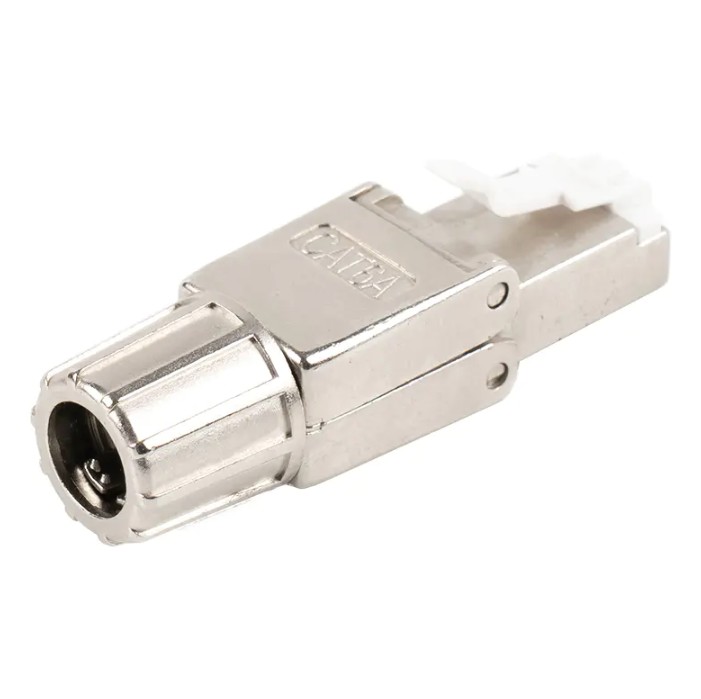
A toolless plug is a connector that can be quickly installed without specialized tools. It is primarily used in networking, communication, or power systems, designed to improve installation efficiency by simplifying the field connection process.
- Tool-free installation: As the name suggests, toolless plugs use specially designed snap-fit or locking mechanisms to complete connections without the need for crimping pliers or screwdrivers. For field engineers, this means a large number of mating operations can be completed in a short time, significantly reducing maintenance time.
- High-density applications: These connectors are compact and suitable for high-density or confined space applications. Whether on the back of a data center rack or inside an industrial cabinet, toolless plugs provide a reliable connection solution.
- Reliability assurance: Despite their ease of installation, they typically have an IP68 protection rating, resisting dust and moisture intrusion and ensuring long-term stable operation.
| Core Element | Description |
| Definition | A plug that can be installed quickly without the need for specialized tools. |
| Main Function | Uses a latch or locking mechanism for rapid connection. |
| Application Scenarios | Data centers, industrial communications, compact spaces. |
| Advantages | Significantly improves installation efficiency and reduces maintenance time. |
What is a toolless connector?
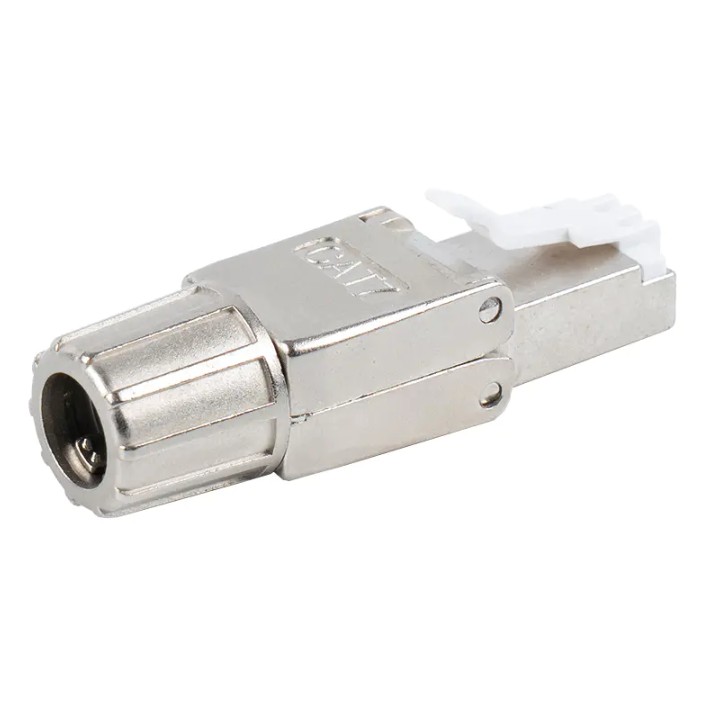
A toolless connector generally refers to a complete system that allows the entire connection process to be completed without tools, including a plug and a jack. It's an extension of the Toolless Plug concept, emphasizing system-level "toolless" connectivity.
- System-level solution: It includes not only individual plugs but also complementary structured cabling products such as Keystone Jacks and Patch Panels, providing a complete connectivity ecosystem.
- OEM customization: Many manufacturers (such as Ningbo Bairui) offer OEM services, allowing customers to customize Toolless Connector systems to meet specific needs, including custom housings, colors, and branding.
- High protection rating: Some high-end models have an IP68 rating, meaning they can operate for extended periods in humid or dusty environments, making them widely applicable to outdoor base stations or harsh industrial environments.
| Core Element | Description |
| Definition | A tool-less connection system that includes both Toolless Plugs and corresponding jacks. |
| System Components | Toolless Plugs, Keystone Jacks, Patch Panels. |
| Customization | Supports OEM customization (e.g., IP68 grade, protection standards). |
| Applicable Scope | Outdoor base stations, data centers, industrial environments. |
What are the structural features of a Toolless Plug?
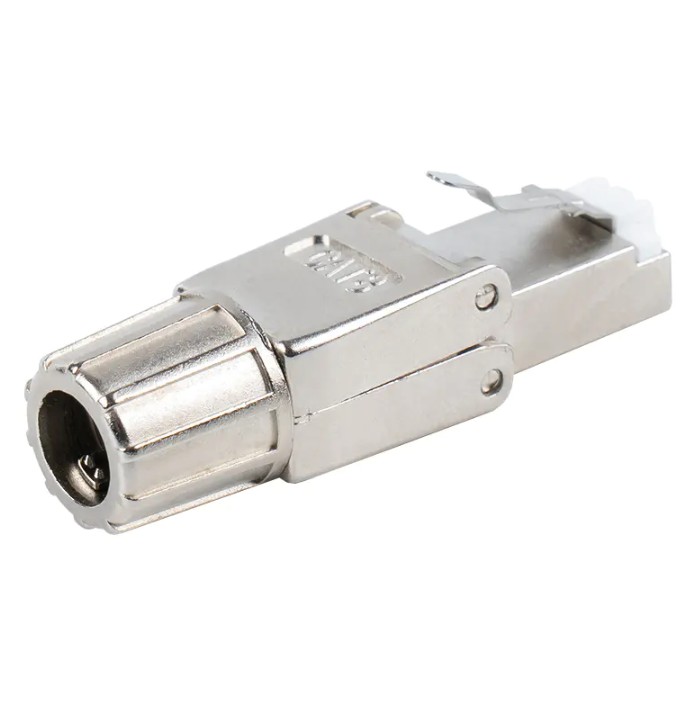
- Locking mechanism: Its core structure typically includes a spring-loaded latch or slot design. A simple press or rotation locks the fiber optic cable or cable, ensuring a secure and stable connection.
- Protective Cover Design: To protect the internal fiber optic or metal cables, many toolless plugs employ double-layer or concealed protective covers, effectively preventing dust and moisture intrusion and improving overall durability.
- Modular Structure: When used with Keystone Jacks, toolless plugs are typically designed for modular plug-and-play operation, supporting quick replacement and upgrades without affecting the integrity of the overall cabling.
| Structural Feature | Function |
| Latch Design | Utilizes a spring or slot mechanism that locks when pressed in. |
| Protective Cover | Double-layer or hidden design for dust and water resistance. |
| Modular | Supports combination with Keystone Jacks for easy replacement. |
| Protection Grade | High-end models typically have an IP68 protection rating. |
What are the main differences between toolless connectors and traditional connectors?
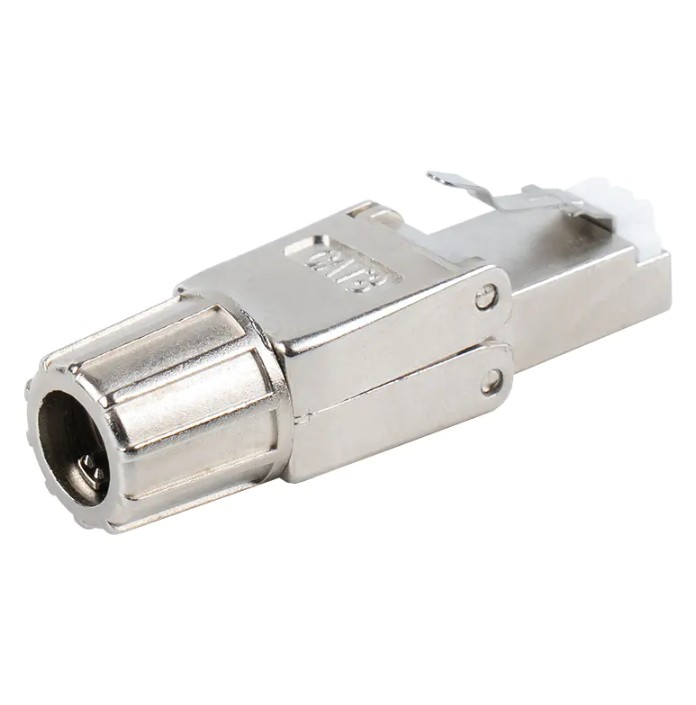
Installation Ease:
- Toolless: No special tools required; plugging and unplugging can be done with one hand.
- Traditional: Usually requires tools such as crimping tools or screwdrivers, making the installation process cumbersome.
Maintenance Efficiency:
- Toolless: Significantly reduces troubleshooting and replacement time, suitable for scenarios requiring frequent maintenance.
- Traditional: Requires carrying tools for maintenance, and the connection process is relatively time-consuming.
Protection Performance:
- Toolless: High-end models typically have an IP68 protection rating, adapting to harsh environments.
- Traditional: Standard models may have lower protection ratings and are more susceptible to environmental influences.
| Comparison Dimension | Toolless Connector | Traditional Connector |
| Installation Method | No crimping tool required; direct insertion. | Requires crimping tools or screwdrivers. |
| Installation Speed | Fast, suitable for on-site installation. | Slower, requires tool preparation. |
| Protection Performance | Often IP68 with high protection. | Varies; generally lower protection. |
| Maintenance Cost | Low; quick replacement. | High; requires tools. |
What extreme environments are toolless connectors suitable for?
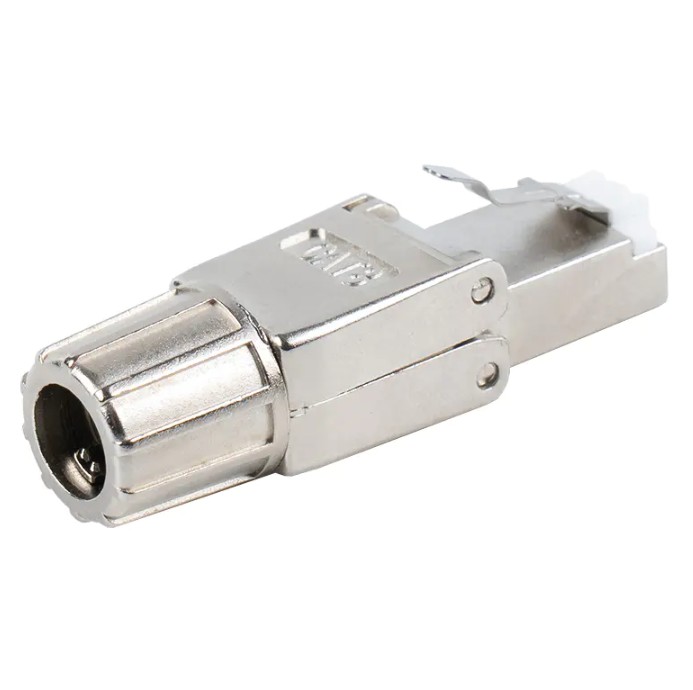
- Outdoor Environment: Models with an IP68 protection rating prevent rain and dust intrusion, making them widely applicable in outdoor locations such as base stations and monitoring rooms.
- High Temperature and Humidity Environment: For data centers or industrial workshops, the Toolless Connector maintains a stable connection in high temperature and humidity environments, preventing signal attenuation.
- Confined Spaces: In space-constrained scenarios (such as behind server racks or inside industrial control boxes), its toolless design makes installation and maintenance extremely convenient.
| Environment Type | Suitability | Key Characteristics |
| Outdoor | Highly suitable | IP68 waterproof and dustproof. |
| High Temperature / High Humidity | Suitable | Utilizes heat-resistant materials. |
| Harsh Industrial | Suitable | Vibration-resistant, corrosion-resistant. |
| Compact Spaces | Ideal choice | Small size, easy to install. |
How to Install Using the Toolless Function?
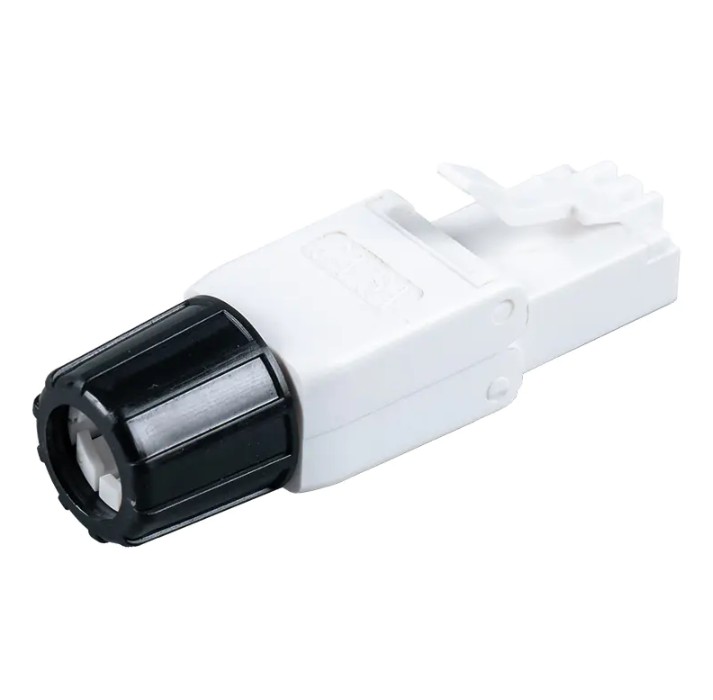
- Preparation: First, ensure the fiber optic cable or cable has been cut to the standard length and clean the fiber optic end face.
- Connecting the Connector: Insert the fiber optic cable or cable directly into the slot of the Toolless Plug, gently pressing until a "click" is heard, indicating successful locking.
- Checking Locking: Gently pull the fiber optic cable or cable with your fingers to ensure it is secure and not easily dislodged.
- Connecting to the Socket: Simply insert the fiber optic plug with the Toolless Plug directly into the matching Toolless Connector (such as a patch panel or panel) to complete the connection; no crimping pliers or screwdrivers are required.
Step Operation Description Preparation Ensure the fiber/cable is cut neatly and the end face is clean. Insertion Directly press the fiber into the Toolless Plug slot. Locking Hear a "click" sound or feel a noticeable resistance. Check Lightly pull the fiber to confirm it is secure. Connect Insert it into the corresponding patch panel or faceplate.
Contact Us
Your email address will not be published. Required field are marked*


-
 No. 588, Xiaolin Avenue, Xiaolin Town, Cixi City, Zhejiang Province
-
 [email protected]
-
 +86-574-63507962
-
 +86-15988643730
Copyright Ningbo Betterbell Telecommunication Equipment Co., Ltd. All rights reserved. Structured Cabling Solutions Manufacturer Network Cabling Products Supplier
