

 English
 Deutsch
 Español
 русский

Home · News · Industry News · What Are the Benefits of Using Toolless RJ45 Connectors in Data Centers?
Industry News
What Are the Benefits of Using Toolless RJ45 Connectors in Data Centers?
2026-07-31Content
- 1 Five Core Benefits Data Centers Gain from Toolless RJ45 Connectors
- 2 Toolless vs Traditional Crimped RJ45 Connectors
- 3 Where Toolless Connectors Deliver the Most Value
- 4 Toolless Plug Product Series
- 5 Shielded or Unshielded — Which Toolless Plug Fits Your Rack
- 6 Sourcing Toolless Connectors for a Large-Scale Build
- 7 Frequently Asked Questions
Toolless RJ45 connectors cut installation time by up to 70 percent compared with crimped plugs, remove the need for dedicated crimping tools, and lower the risk of failed terminations in dense server racks. For data centers running thousands of drops per hall, that translates directly into shorter deployment schedules, fewer callbacks for bad terminations, and lower labor spend per port. The sections below break down exactly where those gains come from and how to choose the right toolless plug for a given rack.
Five Core Benefits Data Centers Gain from Toolless RJ45 Connectors
Faster Field Termination
A technician terminates a standard crimped Cat6A plug in roughly 3 to 5 minutes, including stripping, seating pins, and crimping. A toolless RJ45 connector drops that to under 60 seconds per cable because the conductors snap into pre-set channels and the housing locks with a single push or twist. On a 2,000 port rollout, that difference alone can save more than 100 labor hours.
Fewer Failed Terminations
Manual crimping is operator-dependent; inconsistent pressure or misaligned pins are a leading cause of intermittent link failures discovered only after cutover. Toolless designs use a fixed mechanical path for each conductor, so pin contact is consistent regardless of who installs it, which reduces re-termination rates on final certification testing.
No Dedicated Tooling or Training
Crimping tool sets for shielded Cat6A/Cat7/Cat8 cable can run several hundred dollars each, and new hires need supervised practice before working unsupervised. Toolless plugs eliminate the tool purchase entirely and shorten onboarding for temporary or contract labor, which matters most during large build-outs with rotating crews.
Easier Moves, Adds, and Changes
Data center racks change constantly as equipment is refreshed. Toolless connectors can be opened, re-seated, or reworked without cutting and re-terminating the cable, which shortens maintenance windows and avoids the cable waste that comes from repeated re-crimping.
Compact Form Factor for High-Density Racks
Toolless housings are engineered to sit flush in high-density patch panels without needing clearance for crimp jaws or bulky boots. That keeps 48-port and 96-port panels workable in 1U and 2U spaces, which is often the limiting factor in cabinet layout.
Toolless vs Traditional Crimped RJ45 Connectors
| Factor | Traditional Crimped Plug | Toolless RJ45 Connector |
| Average termination time | 3 to 5 minutes | Under 1 minute |
| Required tools | Crimping tool, stripper, tester | Stripper only, or none |
| Rework after mistake | Cut and re-terminate | Re-open and reseat |
| Operator skill dependency | High | Low |
| Typical use case | Fixed, one-time bulk cabling | High-density, frequently changed racks |
Where Toolless Connectors Deliver the Most Value
Not every cabling job benefits equally from a toolless design. The impact is greatest in environments where speed, density, and rework frequency outweigh raw unit cost.
- Hyperscale and colocation build-outs — thousands of identical drops installed on a tight schedule benefit most from per-cable time savings.
- Temporary or test lab cabling — connectors that need to be reworked repeatedly stay serviceable instead of being scrapped after one crimp.
- Mixed-crew installations — projects using contractors with varied skill levels see more consistent link performance.
- Retrofit projects in live racks — technicians can terminate near active equipment without the vibration and clearance issues crimping tools introduce.
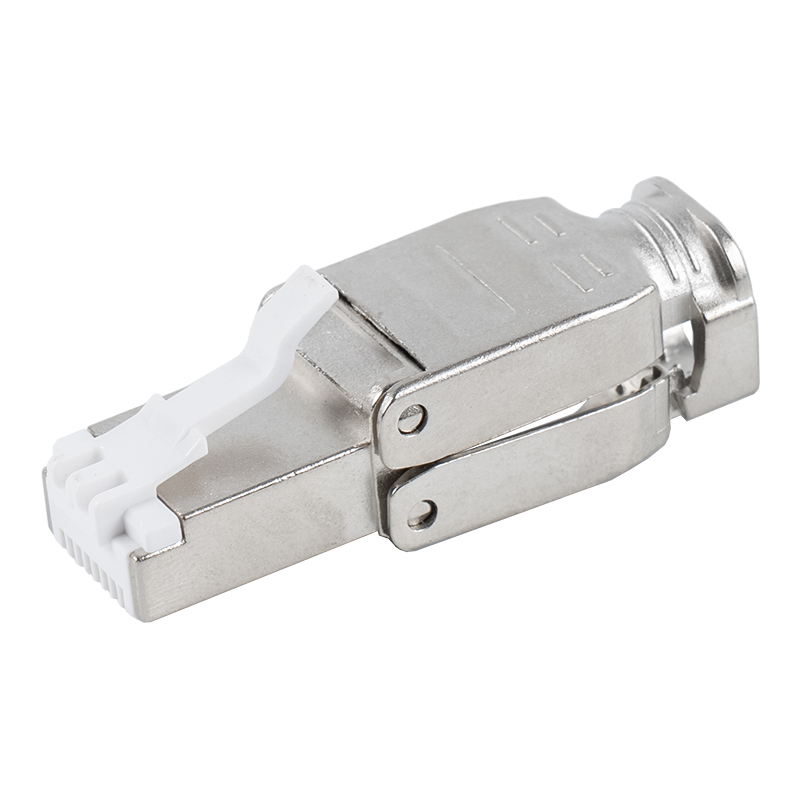
Toolless Plug Product Series
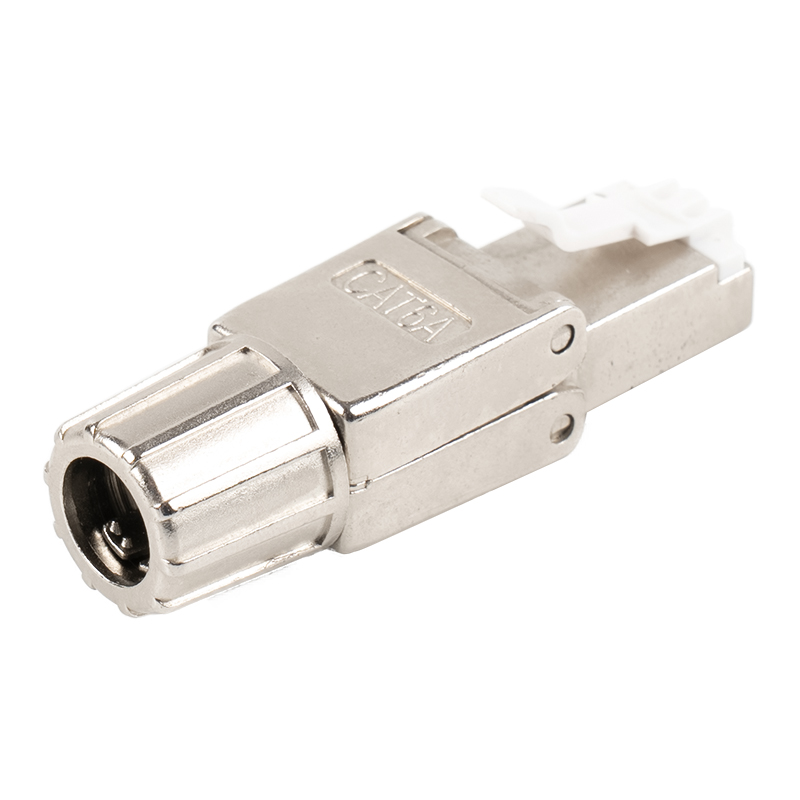
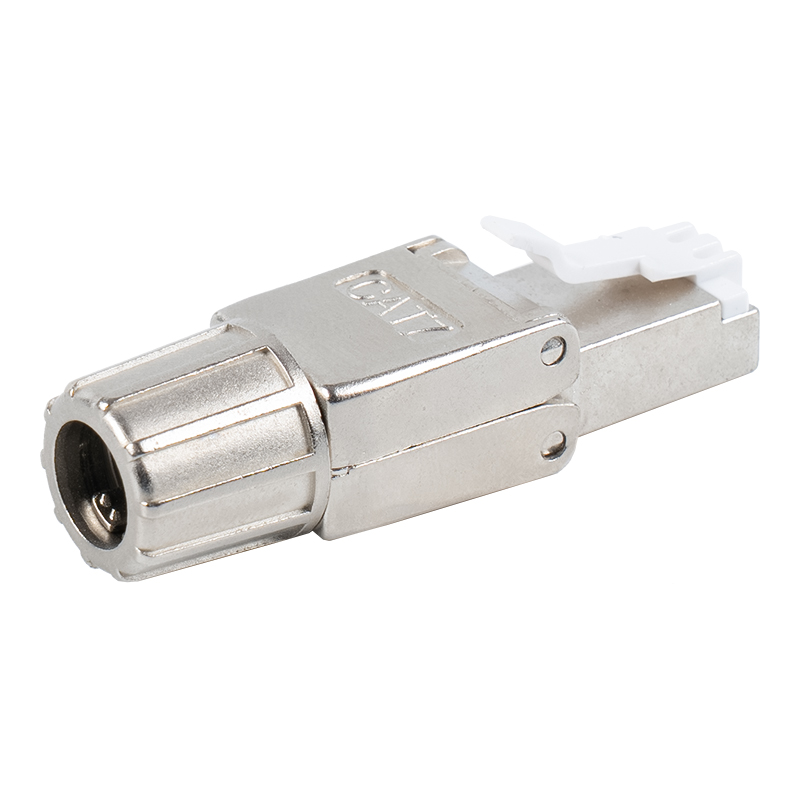
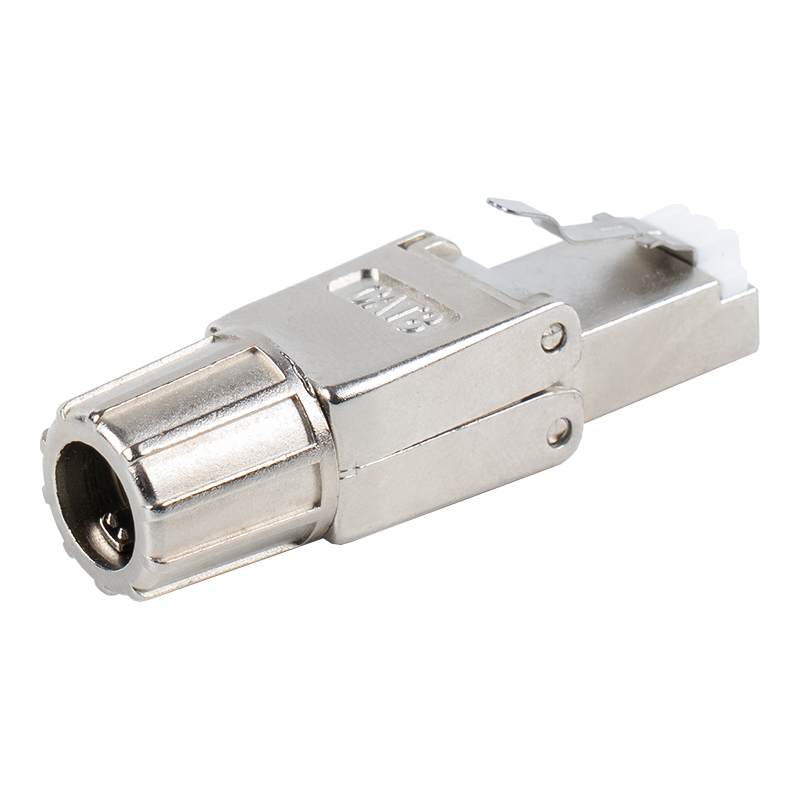
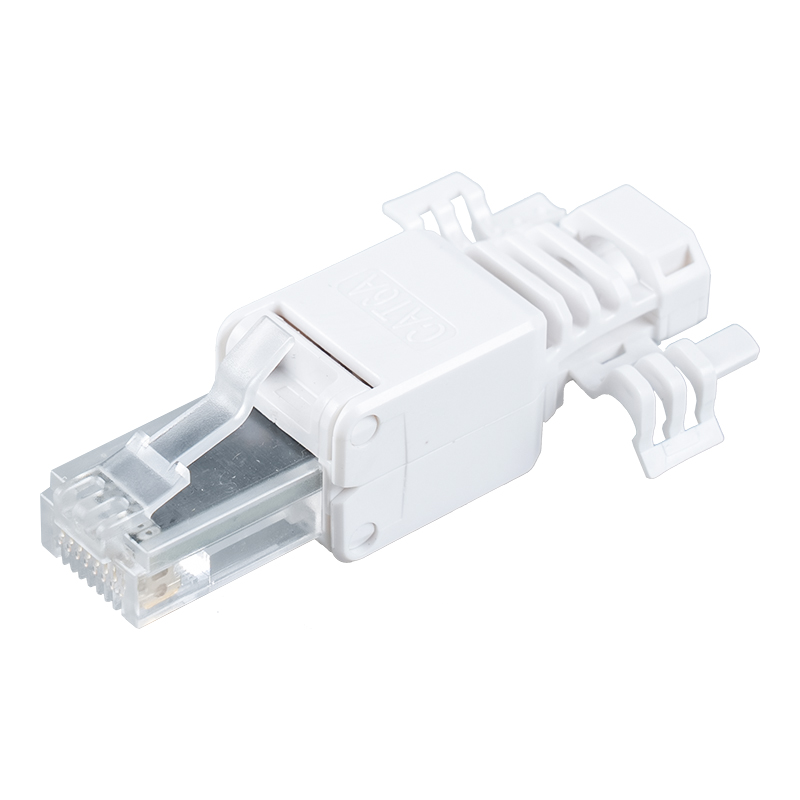
A sample of Cat6A, Cat7, and Cat8 toolless RJ45 connectors available in shielded and unshielded builds, suited for data center patch panels and high-density racks.
Shielded or Unshielded — Which Toolless Plug Fits Your Rack
The toolless design does not change whether a run needs shielding; that decision still depends on the electrical environment around the cable path. Shielded toolless RJ45 connectors are the better fit near power distribution units, generators, HVAC motors, or dense conduit runs shared with high-voltage cabling, since the shield drains induced noise to ground through the panel. Unshielded toolless plugs work well in standard server rooms and office-adjacent equipment closets where electromagnetic interference is minimal, and they cost less per unit while remaining easier to terminate at scale.
| Rack Environment | Recommended Type |
| Near PDUs, UPS units, or generator rooms | Shielded toolless RJ45 |
| Standard server halls, low EMI | Unshielded toolless RJ45 |
| 10G/25G backbone runs, Cat6A and above | Shielded toolless RJ45 |
Sourcing Toolless Connectors for a Large-Scale Build
When a project needs consistent quality across thousands of ports, it makes sense to source from a single OEM Toolless Connector factory rather than mixing batches from multiple suppliers. Ningbo Betterbell (BTBL) operates as a Toolless plug factory and Shielded RJ45 Toolless Plug factory supporting Cat5e through Cat8, and pairs that with related structured cabling lines including a Keystone Jack factory, Patch panel factory, Face plate factory, and Cable Management factory for accessories such as mounting box, bottom box, and inline coupler hardware. For outdoor or high-protection deployments, the same IP68 connector factory line covers dust and water resistance testing, and rack builders working with angled entry points can also pull from a 90 Degree Keystone Jack factory catalog to fit tight cabinet clearances. Sourcing the whole toolless RJ45 and Modular jack factory bill of materials from one line simplifies quality control and shortens lead times on repeat orders.
Frequently Asked Questions
Do toolless RJ45 connectors meet the same performance standards as crimped plugs?
Yes. Toolless connectors rated for Cat6A, Cat7, or Cat8 are tested against the same TIA/ISO channel specifications as crimped equivalents; the termination method changes, not the transmission standard.
Are toolless plugs reusable after disassembly?
Most designs allow the housing to be reopened and the cable reseated a limited number of times before the internal contacts should be replaced, which is still an improvement over a one-time crimp.
Are toolless connectors more expensive per unit than crimped plugs?
The per-unit price is typically somewhat higher, but the labor time saved and reduced failure rate usually offset that difference on projects with more than a few hundred ports.
Can toolless RJ45 connectors be used with shielded Cat6A cable?
Yes, shielded toolless designs include a metal shell or buckle that maintains shield continuity from the cable to the panel ground, matching the performance of a shielded crimped plug.
For data centers weighing installation speed against long-term reliability, toolless RJ45 connectors offer a practical middle ground: faster deployment without giving up certified channel performance, provided the shielded or unshielded type is matched correctly to the rack environment.
Contact Us
Your email address will not be published. Required field are marked*


-
 No. 588, Xiaolin Avenue, Xiaolin Town, Cixi City, Zhejiang Province
-
 [email protected]
-
 +86-574-63507962
-
 +86-15988643730
Copyright Ningbo Betterbell Telecommunication Equipment Co., Ltd. All rights reserved. Structured Cabling Solutions Manufacturer Network Cabling Products Supplier
