

 English
 Deutsch
 Español
 русский

Home · News · Industry News · How to Choose a Reliable Keystone Jack and Patch Panel Factory
Industry News
How to Choose a Reliable Keystone Jack and Patch Panel Factory
2026-08-07Content
- 1 Toolless Plug, Shielded RJ45 Toolless Plug and RJ45 Connector Production
- 2 Keystone Jack, Modular Jack and 90 Degree Keystone Jack Options
- 3 Patch Panel and Face Plate Production Capability
- 4 Core Structured Cabling Product Range
- 5 Cable Management, Mounting Box, Bottom Box and Inline Coupler Accessories
- 6 IP68 Connector Factory for Outdoor and Industrial Applications
- 7 Bandwidth Reference Across Cable Categories
- 8 Where Quality Control Checkpoints Sit in Production
- 9 Factory Evaluation Checklist Before Placing an Order
A dependable structured cabling component factory can be confirmed in three ways: it produces the full product family in house, from toolless plugs and keystone jacks to patch panels and face plates, it holds recognized certifications such as UL, CE, RoHS and ISO9001, and it can show traceable quality records for every production batch. Buyers who check these three points before placing an order avoid the majority of sourcing problems seen in network cabling procurement, including inconsistent port dimensions, unstable contact plating and mismatched color coding between accessories.
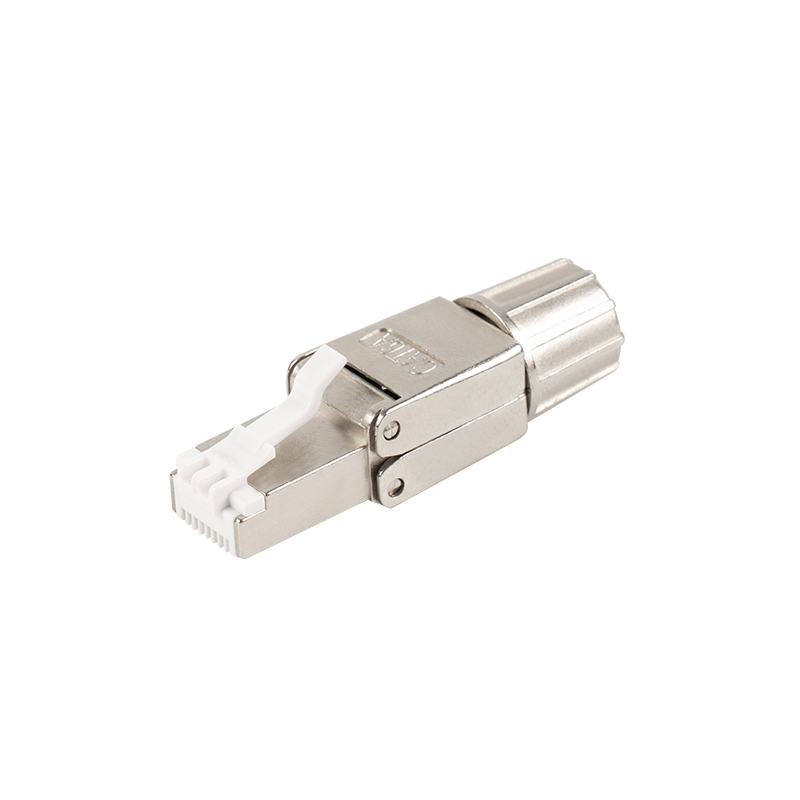
Toolless Plug, Shielded RJ45 Toolless Plug and RJ45 Connector Production
A toolless plug factory builds RJ45 connectors that terminate onto a cable without a crimping tool, using a spring loaded or screw locking mechanism instead of the punch blades found on a traditional RJ45 connector factory line. This matters for installers because a standard crimp plug depends heavily on tool calibration, while a toolless connector keeps termination consistent from technician to technician on site.
Contact Plating
Reliable toolless connector factories use gold flash plating on the contact pins, commonly in the 15 to 50 micro-inch range, to resist oxidation and keep insertion loss stable over repeated mating cycles.
Shielded Versions
A shielded RJ45 toolless plug factory adds a metal shell and drain wire path around the contact block, which is needed wherever cabling runs near motors, lighting ballasts or industrial power lines that generate EMI.
Housing Tolerance
Injection molding tolerance on the plug housing controls how firmly the latch clicks into a keystone jack or patch panel port, which is an easy way to judge tooling quality during a factory audit.
Keystone Jack, Modular Jack and 90 Degree Keystone Jack Options
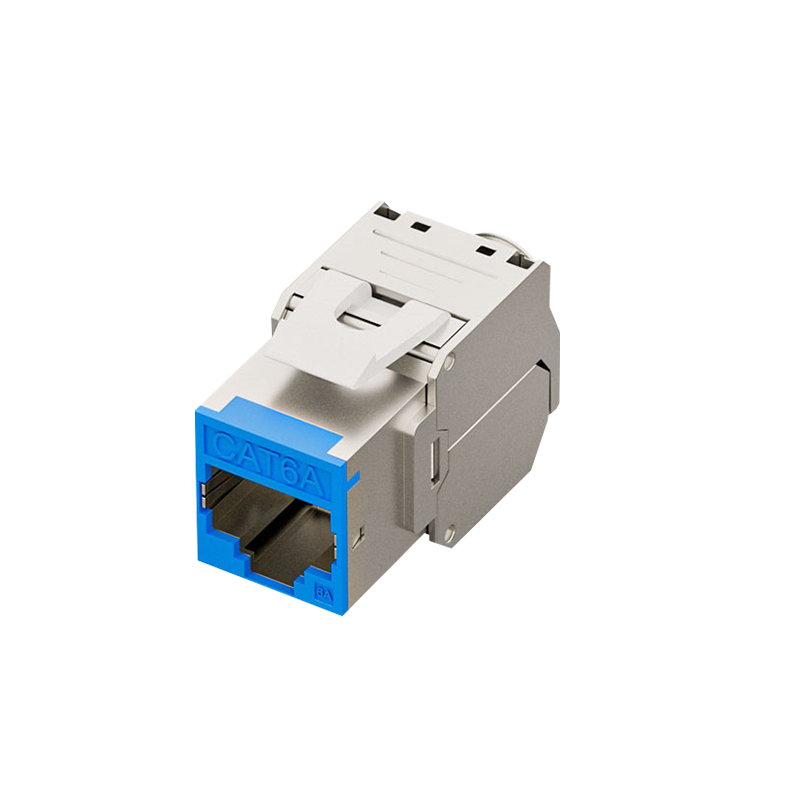
A keystone jack factory and a modular jack factory are effectively describing the same product family, since the keystone form factor is the modular insert that snaps into a face plate or patch panel. The main design decision buyers face is between a straight entry jack and a 90 degree keystone jack, which routes the cable sideways for installations where wall or cabinet depth is limited.
| Feature | Standard Keystone Jack | 90 Degree Keystone Jack |
| Cable Exit Direction | Straight back | Side angled |
| Best Fit | Open patch panels, standard wall boxes | Shallow bottom boxes, low profile face plates |
| Termination Method | 180 degree IDC punch down | 180 degree IDC punch down |
| Typical Rated Mating Cycles | 750 cycles per TIA-568 reference | 750 cycles per TIA-568 reference |
When auditing a keystone jack factory, ask for the flame rating of the housing resin. UL94V-0 rated plastic is the baseline most data center specifications require, and it should be consistent across both the straight and 90 degree keystone jack versions.
Patch Panel and Face Plate Production Capability
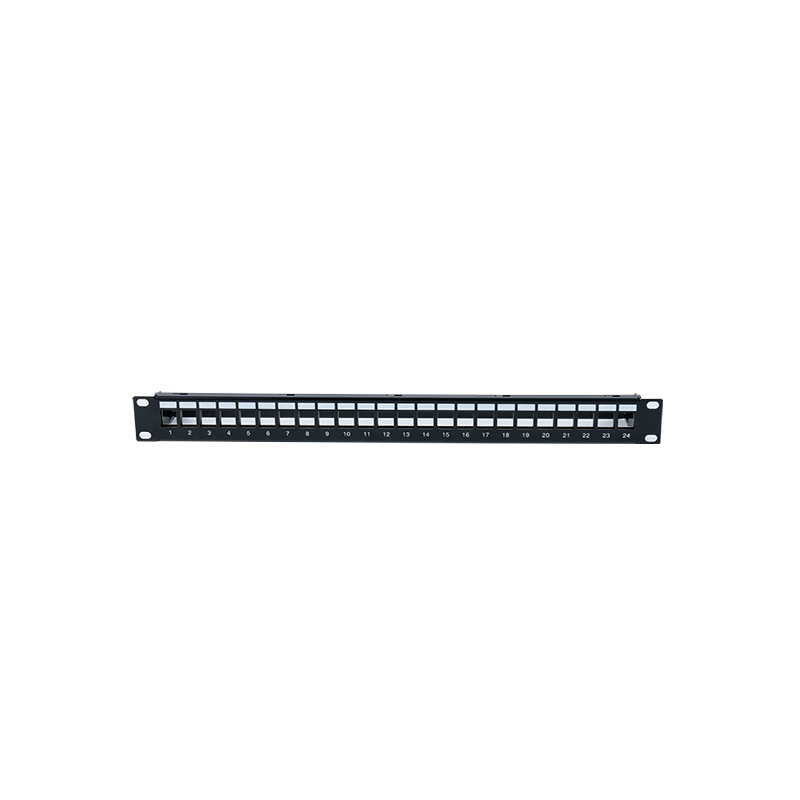
A patch panel factory needs metal stamping and powder coating lines to produce consistent 24 port and 48 port frames, since a warped or misaligned panel throws off port spacing across an entire rack. A face plate factory works on a smaller scale but still needs mold consistency, because a face plate that does not sit flush against the wall is one of the most common complaints installers raise.
Buyers sourcing both products from a single supplier benefit from matched port cutouts, since a keystone jack from that same factory is guaranteed to snap into its patch panel and face plate without a secondary adapter.
24 / 48
Common patch panel port counts
1 to 6
Ports per face plate design
1U / 2U
Standard rack panel heights
Core Structured Cabling Product Range
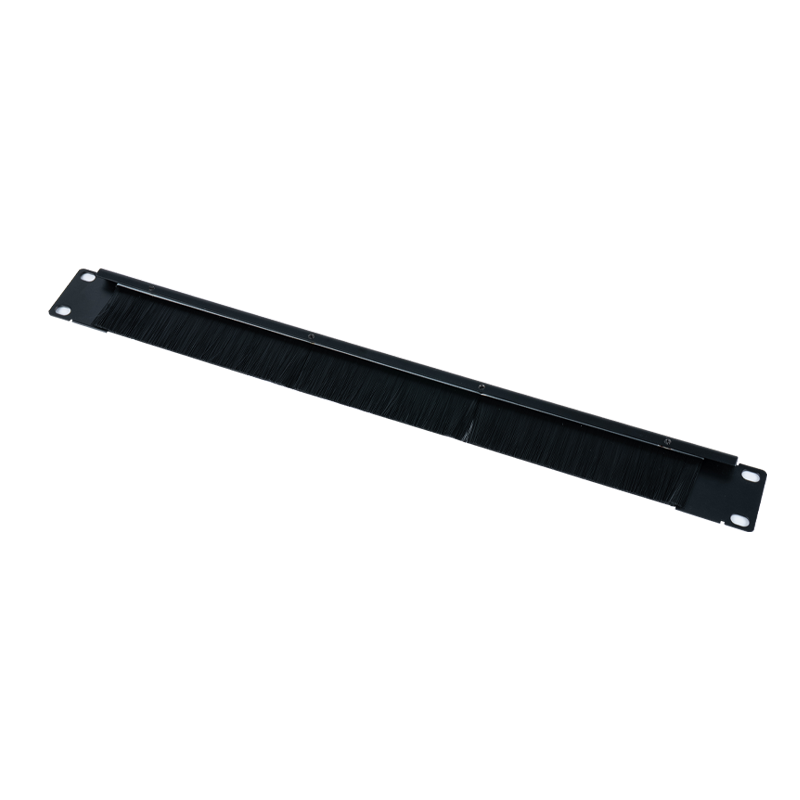
The product families referenced throughout this guide are manufactured together on one production floor, which keeps port dimensions, plating and housing colors consistent across an entire installation.

Cable Management, Mounting Box, Bottom Box and Inline Coupler Accessories
Beyond the connector and jack itself, a complete cabling order usually includes several accessory categories that a single cable management factory can supply together.
- Cable Manager
Horizontal and vertical cable managers keep patch cords organized above and below a patch panel, reducing strain on the terminated ports and making later moves or changes far faster to trace.
- Mounting Box
A mounting box factory produces the surface boxes that hold a face plate on drywall or concrete where no in wall cavity exists, common in retrofit projects and industrial buildings.
- Bottom Box
A bottom box is the recessed enclosure set into a wall before finishing, and a bottom box factory needs to match its opening size to the face plate range it will be paired with.
- Inline Coupler
An inline coupler factory produces small barrel connectors used to join two cable runs end to end, which is often more practical than repulling a cable through a completed wall or ceiling.
IP68 Connector Factory for Outdoor and Industrial Applications
An IP68 connector factory builds sealed variants of the same keystone jack and plug families for use outside a building envelope. Under IEC 60529, an IP68 rating means the housing is fully dust tight and remains protected against continuous water immersion beyond one meter of depth, which is the benchmark for outdoor CCTV runs, industrial automation lines and rooftop wireless equipment.
Because the sealing gasket adds thickness around the connector body, an IP68 connector factory should confirm the product still fits standard face plates and bottom boxes, or supply a matching outdoor rated enclosure alongside it.
Bandwidth Reference Across Cable Categories
Keystone jacks and patch panels are rated to match the copper cabling category they terminate. The chart below lines up the certified bandwidth for each category as defined in TIA-568 reference documentation, which is the figure a factory should be able to quote for any jack or panel in its catalog.
Where Quality Control Checkpoints Sit in Production
Structured cabling factories typically spread inspection across four stages rather than relying on a single final check. Raw material inspection screens copper and resin batches, in process testing checks IDC punch down accuracy and plating thickness during the run, pre-shipment testing covers wire map and insertion loss on finished units, and a packaging check confirms labeling and port counts before the carton is sealed.
Raw Material Inspection, 20 percent
In-Process Testing, 35 percent
Pre-Shipment Testing, 30 percent
Packaging Check, 15 percent
Factory Evaluation Checklist Before Placing an Order
- Product range overlap. Confirm the factory produces toolless plugs, keystone jacks, patch panels and face plates in house rather than trading them from separate suppliers.
- Certification set. Request current UL, CE, RoHS, CSA and ISO9001 documents and match the certificate numbers against the issuing body database.
- Sample testing. Ask for a wire map and insertion loss report on a small sample batch before committing to a container order.
- Accessory matching. Verify that mounting boxes, bottom boxes and inline couplers from the same factory fit the face plates and jacks in the same catalog.
- Outdoor rated options. If any part of the project is exterior, confirm an IP68 rated connector and enclosure are available from the same production line.
Sourcing keystone jacks, patch panels, toolless plugs and their accessories from one factory reduces the risk of dimensional mismatches and gives a single point of contact for certification records and testing reports. Reviewing the checklist above during a factory audit is a practical way to confirm that a supplier can support a project from the first sample through full container production.
Contact Us
Your email address will not be published. Required field are marked*


-
 No. 588, Xiaolin Avenue, Xiaolin Town, Cixi City, Zhejiang Province
-
 [email protected]
-
 +86-574-63507962
-
 +86-15988643730
Copyright Ningbo Betterbell Telecommunication Equipment Co., Ltd. All rights reserved. Structured Cabling Solutions Manufacturer Network Cabling Products Supplier
