

 English
 Deutsch
 Español
 русский
Home · News · Industry News · How to Fix a Face Plate Not Flush with Wall: Causes, Solutions, and Product Tips
Industry News
How to Fix a Face Plate Not Flush with Wall: Causes, Solutions, and Product Tips
2026-09-04Content
What Actually Causes a Face Plate to Sit Off the Wall
You just finished a tile backsplash, added wainscoting, or simply noticed that the wall plate around your RJ45 keystone jack still rocks when you press it. The face plate may look fine on its own, but once it’s screwed in, it floats above the surface or tilts to one side. Before you grab a larger screw or a new cover, understand the root cause. Most of these problems are not about the plate itself; they’re about the bottom box, wall depth, or the screw anchors behind it.
In our installation work and support discussions, off-flush face plates almost always trace back to three conditions: the bottom box sitting too deep, a new wall layer that raises the surface, or a misaligned mounting hole. The chart below shows how these causes usually break down.
- Bottom box too deep 45%
- Wall thickness increased 30%
- Misaligned screw holes 25%
A bottom box set too deep is the most common issue, especially in older walls where nailing flanges or old-work clips were used. When the drywall is replaced or tile is added, the box stays behind the new surface. A standard face plate has only a few millimetres of clearance. If the gap exceeds 3 mm, the plate will not reach the wall.
For a standard 86-type single-port installation, the panel itself is often not the enemy; the mounting structure is. That is why a quality face plate with flexible mounting wings can make a real difference when the wall depth varies slightly.
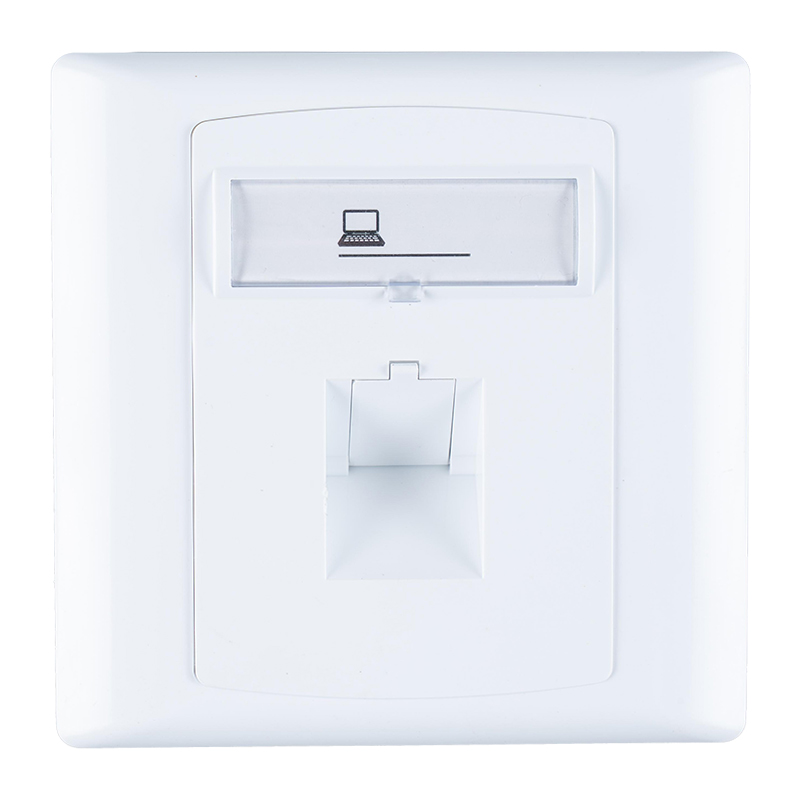 86-Type Single-Port Face Plate with Dust Shutter and Label WindowThis standard 86mm square panel features a flame-retardant ABS body, a keystone slot for RJ45 or RJ11 modules, and a dust cover. Its flexible mounting wings help accommodate slight wall depth variations, making it a practical choice for retrofit or new installations.View Product →
How to Diagnose an Off-Flush Face Plate
Before you buy a new plate or start shimming, take a few minutes to isolate the problem. Remove the face plate and look into the opening. Here is a quick checklist:
- Use a spirit level to check whether the bottom box itself is plumb. A box that tilts top to bottom will push the plate out at one corner.
- Check the gap between the box edge and the finished wall surface. If you can see daylight, the box is too shallow.
- Look for stripped screw holes in the box. If the plate screws thread into worn plastic or metal, the plate will pull unevenly.
- Inspect the back of the face plate. Some plates have ribs or mounting tabs that hit an obstruction, causing rocking.
If you are working on a network outlet in a commercial space, you can also test the keystone jack after the plate is removed. A loose module can make the plate appear uneven even when the plate itself is flat.
In structured cabling, a well-seated face plate should leave less than 1 mm of visible gap at the edges. Larger gaps invite dust and can cause pressure on the keystone jack, which shortens the life of the connector.
Step-by-Step Fixes for a Face Plate Not Flush with Wall
The fix depends on what you found. In most cases, you can solve it with simple adjustments and a few inexpensive parts. Follow these steps in order.
- Loosen the mounting screws by 1/8 to 1/4 turn. Some plates are designed to flex into position. By loosening the screws, you let the plate relax against the wall surface.
- Insert box spacers. For gaps between 2 mm and 6 mm, use plastic spacers behind the plate. Slide them over the screws or snap them onto the bottom box.
- Use a bottom box ring extender. If the box is too deep, a ring extender brings the mounting face forward while keeping the interior accessible.
- Switch to an old-work clip. For drywall, an old-work clip can pull a box forward from the side.
- Replace the bottom box if it is severely recessed or damaged. A new box gives you a clean, flat surface to mount the plate.
- Use a face plate with a thicker frame or wider mounting wings. These designs tolerate surface unevenness better.
Always turn off the power at the breaker before working on an electrical outlet. For network-only face plates, this is less critical, but good practice includes cleaning the area and using gentle pressure to avoid cracking brittle face plates.
Replacing the bottom box is sometimes the cleanest route. An 86/120 type bottom box with deeper corners helps you get the plate flush and gives the keystone jack more room to seat correctly.
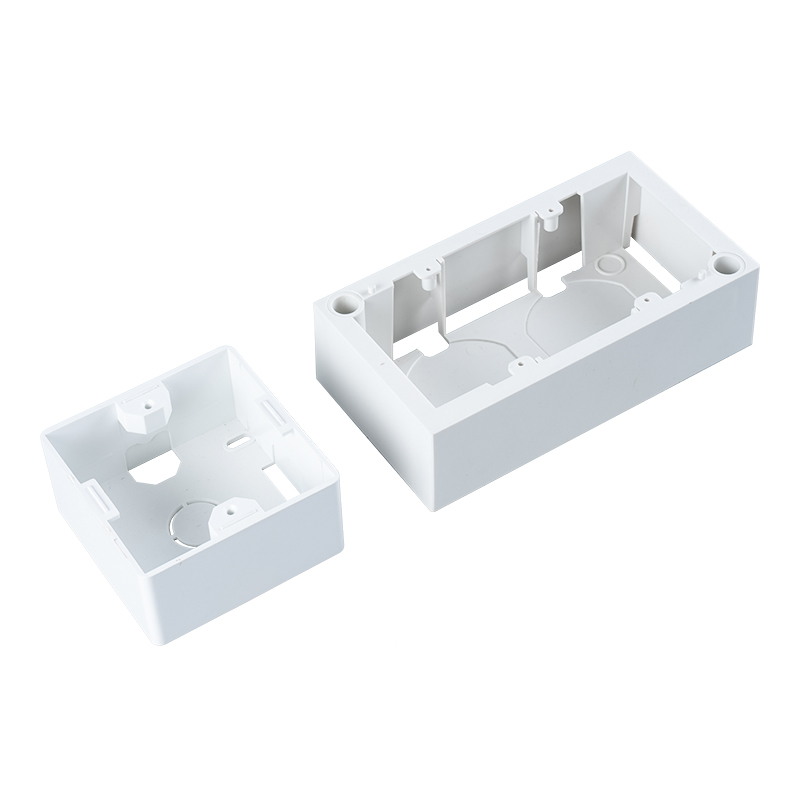 86/120-Type Recessed Bottom Box for Wall PlatesDesigned to fit standard 86×86mm wall boxes, this durable PC/ABS bottom box provides deeper corners to correct wall depth irregularities. Pre-drilled holes simplify mounting, ensuring your face plate sits flush and keystone jacks seat properly.View Product →
Special Wall Types: Tile, Wood, and Old Drywall
Tiled kitchens, wood paneling, and uneven old plaster all present unique challenges. Each surface changes the effective wall depth and the way the bottom box sits behind the face plate.
Tile walls
Tile can add 6-10 mm to the wall depth. Use a longer box ring or an extended bottom box to bring the opening out. Never shim a face plate with thin strips that might become visible.
Wood paneling
Wood paneling often moves with seasonal humidity. Mount the bottom box on a firmed-up backing rather than the panel itself. This prevents the plate from bowing out later.
Old drywall / reinforcement
Old drywall near the wall opening may be crumbling or too soft. Reinforce the hole with an old-work clip or a low-profile mounting bracket before attempting to seat a standard face plate. If you skip this step, the screws will keep pulling out of the drywall.
A face plate that is not flush after these methods may need a final shim made from a ring of self-adhesive foam. It won’t be visible once the plate is on, and it fills the gap without transferring force to the wall.
Choosing the Right Face Plate and Bottom Box
When selecting a new face plate, a few material and dimensional details matter far more than looks. Use the table below to compare standard options.
| Configuration | Number of openings | Best suited for |
|---|---|---|
| Single-port 86×86 | 1 | Standalone office outlet, one network cable |
| Dual-slot 86×86 | 2 | Two keystone modules in a compact wall opening |
| Four-port 86×86 | 4 | Conference rooms, small patch areas, desktop connections |
The panel thickness and frame design also affect flushness. A panel with a slight beveled edge can hide small wall irregularities. Polycarbonate (PC) plates are more rigid than ABS, which matters in high-traffic areas.
For a common two-port outlet in an office wall, a dual-slot 86 type plate gives you a clean, compact installation while keeping the surface flat.
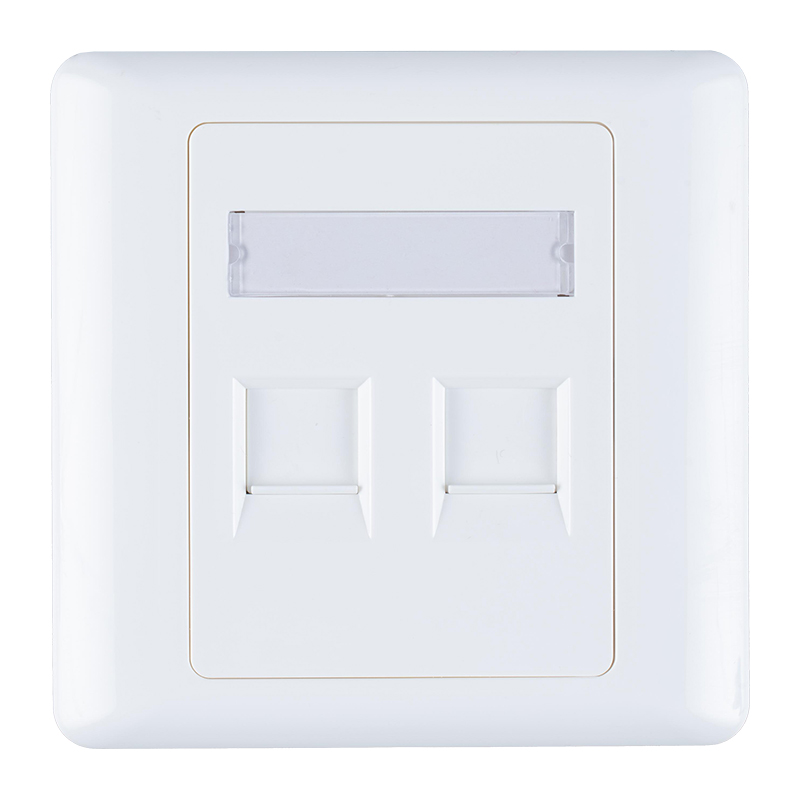 86-Type Dual-Port Face Plate with Transparent Label WindowThis two-port panel fits standard 86mm boxes, accepting shielded or unshielded keystone jacks up to Cat8. Its compact, matte white design and easy screw mounting make it ideal for office outlets, keeping the surface clean and organized.View Product →
If you need a non-standard opening count or a specific wall thickness component, Betterbell offers ODM/OEM customization for wall plates and bottom boxes. You can share your drawings and we will help you find the right production path. See our customization service for details.
customization serviceFrequently Asked Questions
Why does my face plate still rock after I tightened the screws?
Tightening the screws pulls the plate toward the wall, but it cannot fix a box that is too deep or misaligned. The plate will rock because part of its back contacts the wall while another part hangs in the air. You need to address the mounting surface, not the screw torque.
Can I use a larger screw to fix an off-flush face plate?
Larger screws can strip the threads in the bottom box or push the plate further out. They are not a reliable fix. Use spacers, an old-work clip, or a box extender instead.
Do I need a special face plate for network cables?
Standard keystone face plates work for RJ45, HDMI, USB, and other modules. The key is to choose the correct number of openings and a material thickness that fits your wall depth.
How often should I replace an old face plate?
Replace a face plate if it is cracked, warped, or no longer holds keystone jacks securely. A plate that has lost its flexibility can break when you remove it.
With the right measurements, a few spacers or a properly selected bottom box, you can fix a not-flush face plate without an electrician. If the issue sits in a custom wall or a data center-grade installation, talk to our team directly. We can guide you through the right product selection, and we’re happy to discuss your specific application.
contact our teamContact Us
Your email address will not be published. Required field are marked*


-
 No. 588, Xiaolin Avenue, Xiaolin Town, Cixi City, Zhejiang Province
-
 [email protected]
-
 +86-574-63507962
-
 +86-15988643730
Copyright Ningbo Betterbell Telecommunication Equipment Co., Ltd. All rights reserved. Structured Cabling Solutions Manufacturer Network Cabling Products Supplier
