

 English
 Deutsch
 Español
 русский

Home · News · Industry News · 5G Network Cabling Infrastructure: Choosing the Right Components for Reliable Performance
Industry News
5G Network Cabling Infrastructure: Choosing the Right Components for Reliable Performance
2026-09-18Content
When a telecom operator deploys a 5G small cell in a dense urban area, that single radio head typically requires a backhaul link of 10 Gbps or more. That demand cascades all the way down to the horizontal cabling inside the building or data centre that serves that cell. The conclusion is clear: 5G network cabling infrastructure must support higher bandwidth, lower latency, and greater density than any previous generation. This article explains exactly what that means for the physical layer – from the patch panel to the keystone jack – and how to choose components that will perform reliably for years.
Figure 1: Peak data rate evolution – cabling must keep pace.Why 5G Demands a Step Change in Copper Cabling
The most immediate effect of 5G on the physical layer is the need for higher frequency operation and denser small‑cell deployment. Unlike 4G, where a macro cell could serve a wide area with moderate backhaul (1–10 Gbps), 5G small cells are placed every 200–500 metres in urban areas, each requiring 10–25 Gbps of transport. Inside a building or data centre, the horizontal cabling that connects the access point to the distribution switch must therefore be capable of at least 10 Gbps over the full 100‑metre channel.
Copper cabling remains the most cost‑effective choice for the last 100 metres, but not every category can deliver the required performance. Cat5e is limited to 1 Gbps, Cat6 to 10 Gbps only up to 55 metres. For full 100‑metre support at 10 Gbps, Cat6A is the minimum. For 25 Gbps or 40 Gbps short‑reach applications, Cat7 or Cat8 become necessary. The practical takeaway: any new 5G‑related cabling project should specify at least Cat6A (ISO Class EA) for future‑proofing, and consider Cat8 (Class II) for data‑centre top‑of‑rack links.
Figure 2: Maximum supported data rate over 100 metres copper (Gbps).Key Components in the 5G Cabling Infrastructure
Reliable 5G cabling hinges on three physical‑layer components: the patch panel, the keystone jack, and the connector (plug). Each must be rated to the same category as the cable and must maintain signal integrity under real‑world installation conditions.
Patch Panels
In high‑density environments such as a 5G edge data centre, patch panels serve as the central termination point. Look for 19‑inch 1U panels with 24 or 48 ports that support both shielded and unshielded modules. Panels with removable label holders and integrated cable management simplify moves, adds, and changes – a necessity when small‑cell locations shift.
A 24‑port unshielded patch panel loaded with Cat6A keystone jacks is a typical choice for 10 Gbps horizontal cabling. For 25 Gbps or 40 Gbps links, shielded Cat8 panels are recommended to control alien crosstalk.
Keystone Jacks
Keystone jacks must be matched to the cable category. For 5G backhaul, Cat6A shielded jacks (e.g., 180‑degree toolless type) are popular because they reduce termination time and maintain consistent performance. The locking tab and metal body help ensure secure connections in vibration‑prone environments like telecom cabinets.
Toolless Plugs
Field‑terminated plugs are often the bottleneck. Traditional crimp‑on plugs require expensive dies and skilled labour, and poor terminations cause costly rework. Toolless RJ45 connectors – especially those supporting Cat6A and Cat8 – allow field technicians to terminate a cable in under 60 seconds without any special tool, while achieving full Category compliance. For a 5G deployment where hundreds or thousands of small cells are connected, toolless plugs dramatically reduce labour time and error rates.
Figure 3: Typical 5G small‑cell cabling media share in urban deployments.Why Toolless Connectivity Matters for 5G
5G rollouts demand speed – both in data rate and in installation velocity. Traditional field‑terminated plugs require a 4‑pair punch‑down tool or a crimper, and re‑termination because of a misaligned wire often leads to scrap. Toolless connectors, such as the 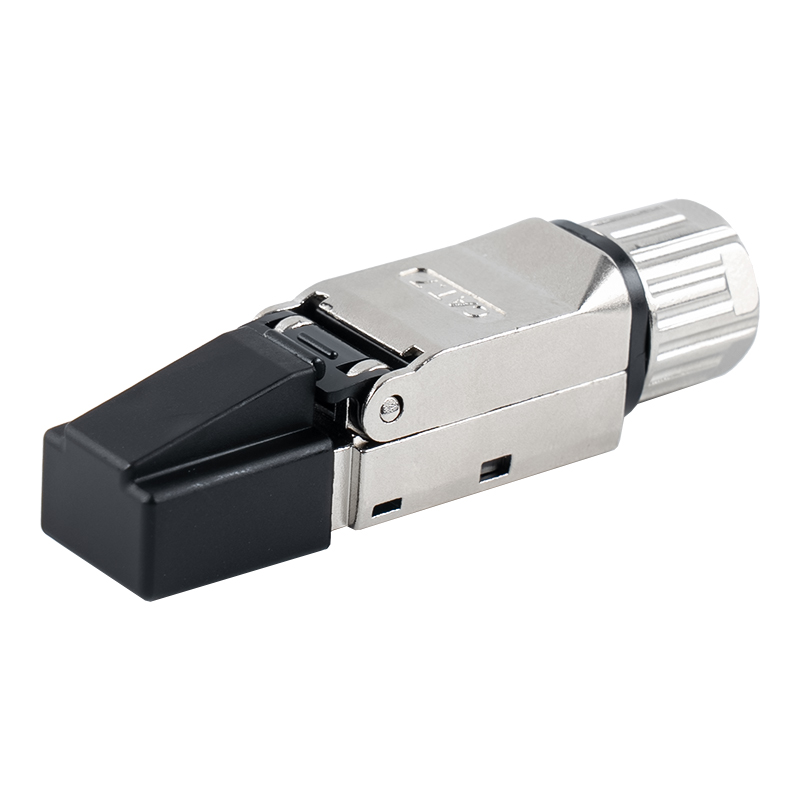 Cat6A Shielded Toolless RJ45 Connector with Plastic CoverThis toolless connector enables quick, tool-free termination for 10 Gbps networks, ideal for 5G deployments where installation speed and reliability are critical.View Product → from BTBL, allow the installer to simply insert the wire pairs into colour‑coded slots and snap the housing shut. The termination is consistent, repeatable, and fully compliant with Class EA (Cat6A) requirements.
For 40 Gbps deployments, the  Cat8 Shielded Toolless RJ45 Connector for 40 GbpsSupporting up to 40 Gbps and 2000 MHz, this toolless plug pairs with shielded patch panels to build high-speed backhaul without specialized tools.View Product → provides the same ease of use while supporting frequencies up to 2000 MHz. Together with a matching
 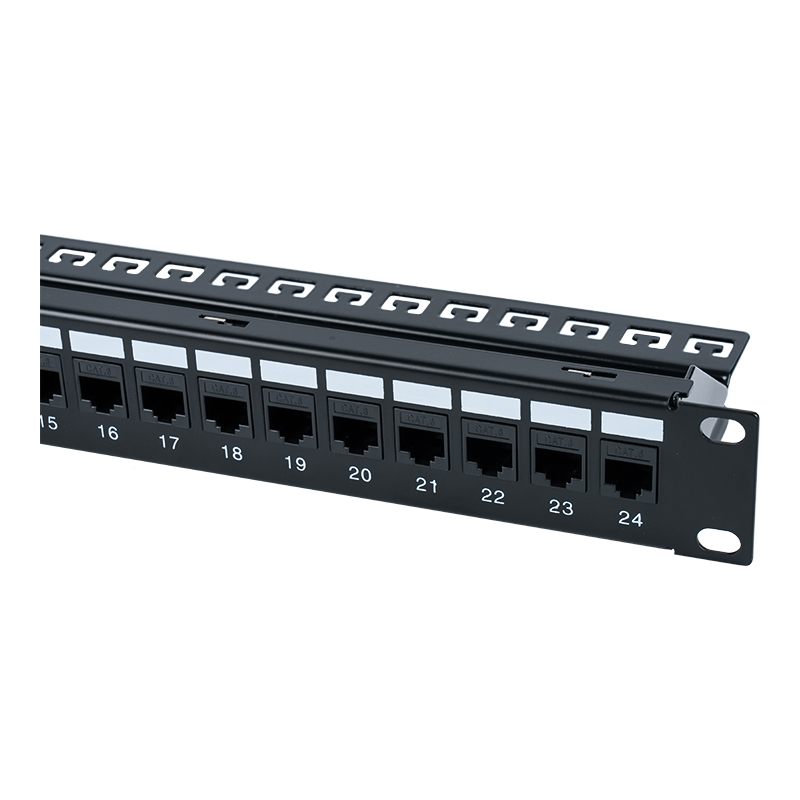 19-Inch 1U 24-Port Shielded Patch Panel with Cat6 ModulesThis high-density patch panel complements toolless connectors in a complete shielded end-to-end system, handling 25 Gbps backhaul efficiently in 5G infrastructure.View Product →, these components form a complete end‑to‑end physical layer that can handle 25 Gbps backhaul without a single specialised tool.
Beyond speed, toolless connectors reduce inventory complexity. A single type of toolless plug can work with multiple cable diameters (24–23 AWG solid or stranded), eliminating the need to stock multiple plug sizes. This is especially valuable for 5G projects that mix indoor and outdoor cable types.
Practical Procurement Considerations
When purchasing components for 5G cabling infrastructure, keep these points in mind:
- Category matching: Ensure the patch panel, keystone jack, and plug are all rated to the same category (e.g., Cat6A). Mixing Cat6 patch panels with Cat6A jacks introduces a bottleneck.
- Shielding: In 5G small‑cell enclosures, nearby power cables and radio emissions can cause interference. Shielded components with a solid metal body and 360‑degree grounding provide the best immunity.
- Certification: Look for third‑party test reports (e.g., Fluke DSX) that verify compliance with TIA/EIA or ISO/IEC standards. A reliable manufacturer like BTBL publishes such data for its modules and panels.
- Cable management: High‑density patch panels require front‑accessible cable management rings or brush strips to avoid congestion and maintain bend radius. The 19‑inch 1U metal cable management stand is a practical companion.
Frequently Asked Questions
Can I use Cat6 for 5G backhaul?
Cat6 supports 10 Gbps only up to 55 metres. If your horizontal run exceeds 55 metres – typical in office buildings – Cat6A is required. For new installations, Cat6A is the safer investment.
Are toolless plugs as reliable as crimp‑on plugs?
Yes, when properly rated. Toolless connectors such as the Cat6A and Cat8 models from BTBL are tested to the same standards as traditional connectors. In fact, because the wire pairs are not exposed to crimping forces, the risk of damage to the conductors is lower, often resulting in better long‑term reliability.
What is the maximum distance for copper cabling in 5G?
The structured cabling standard limits copper channels to 100 metres (90 m permanent link + 10 m patch). For distances beyond 100 metres, fibre optic cabling must be used. However, the vast majority of small‑cell installations fall within the 100‑metre range.
Looking Ahead
As 5G evolves toward 5G‑Advanced and eventually 6G, the physical layer must support data rates of 40–100 Gbps at the edge. Today’s investment in Cat6A and Cat8 copper, combined with toolless termination and well‑designed patch panels, provides a path that will serve at least a decade. The key is to select components not just for bandwidth, but for installation ease and field reliability – qualities that toolless connectivity and experienced partners deliver.
Contact Us
Your email address will not be published. Required field are marked*


-
 No. 588, Xiaolin Avenue, Xiaolin Town, Cixi City, Zhejiang Province
-
 [email protected]
-
 +86-574-63507962
-
 +86-15988643730
Copyright Ningbo Betterbell Telecommunication Equipment Co., Ltd. All rights reserved. Structured Cabling Solutions Manufacturer Network Cabling Products Supplier
