

 English
 Deutsch
 Español
 русский
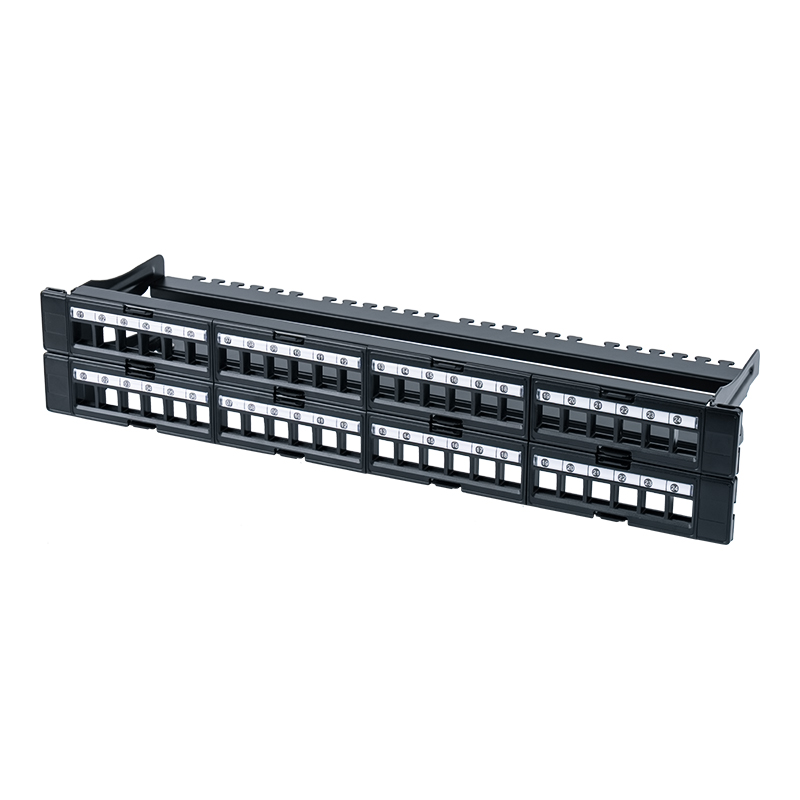
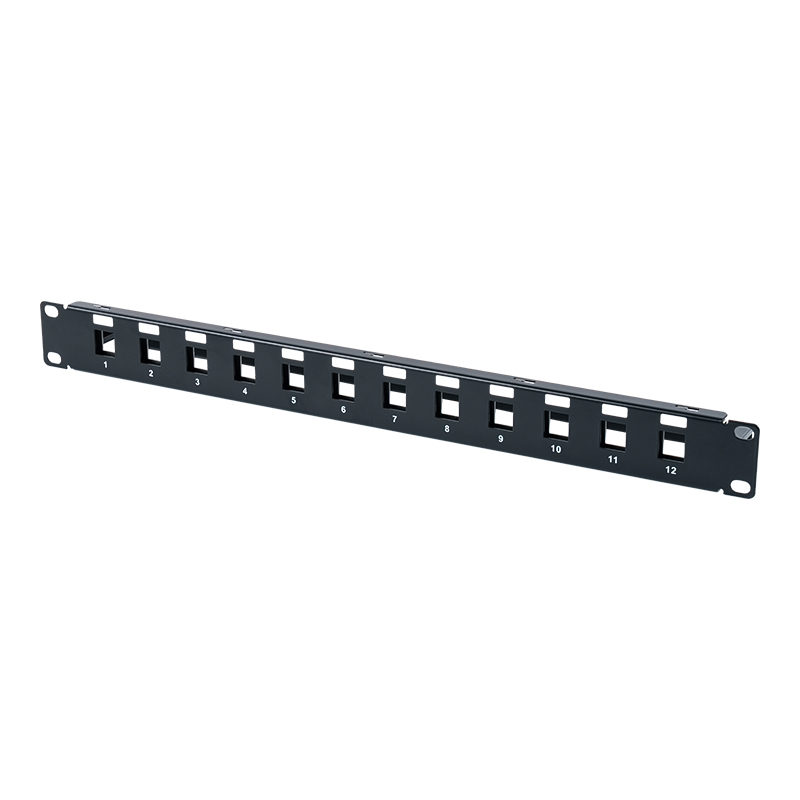
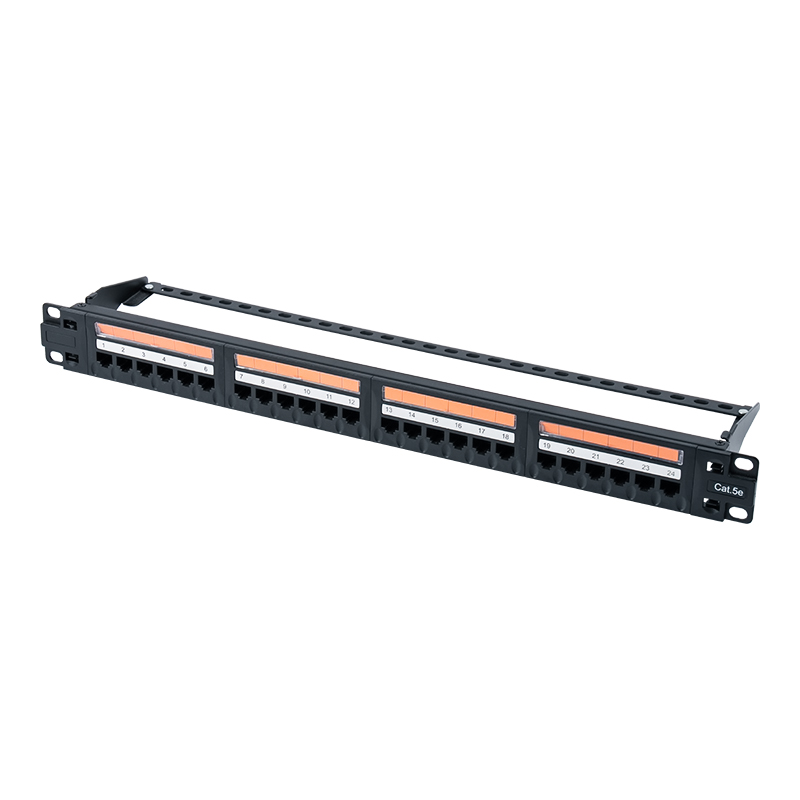
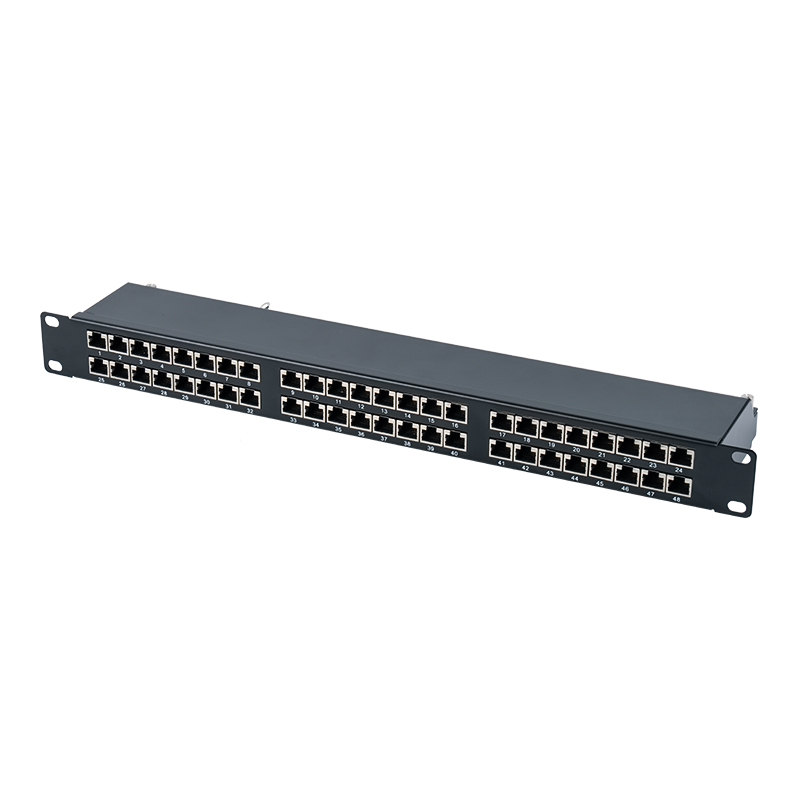
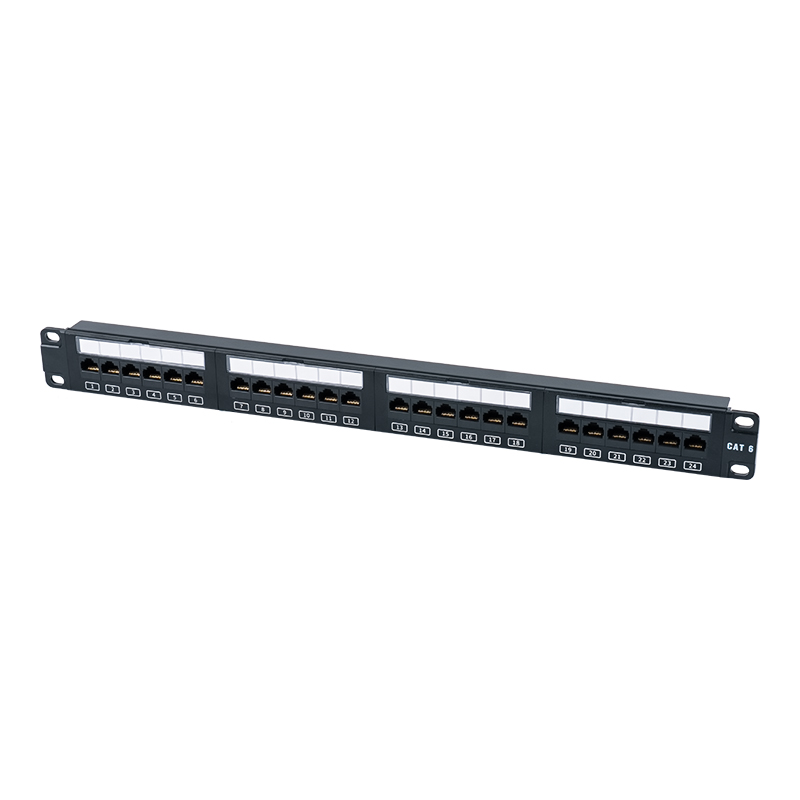

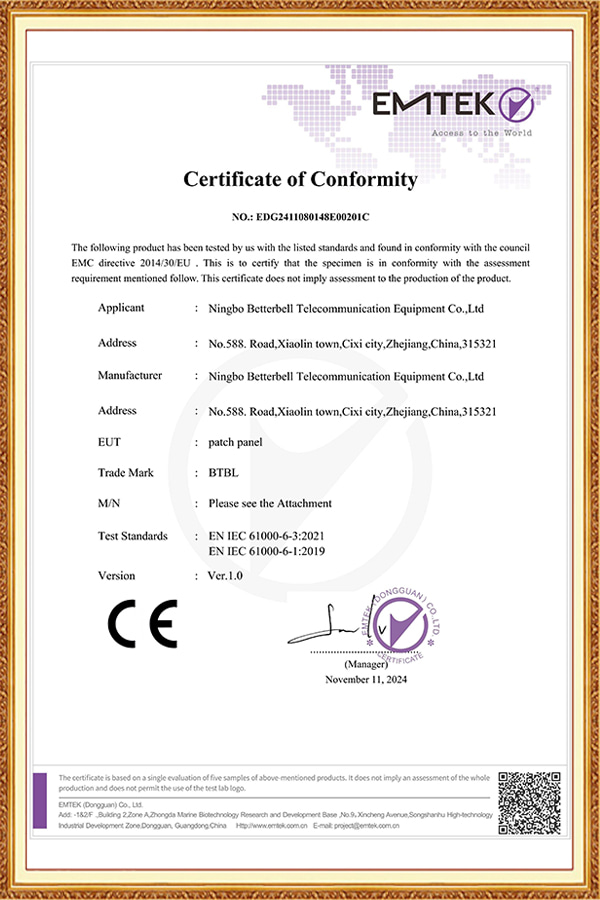
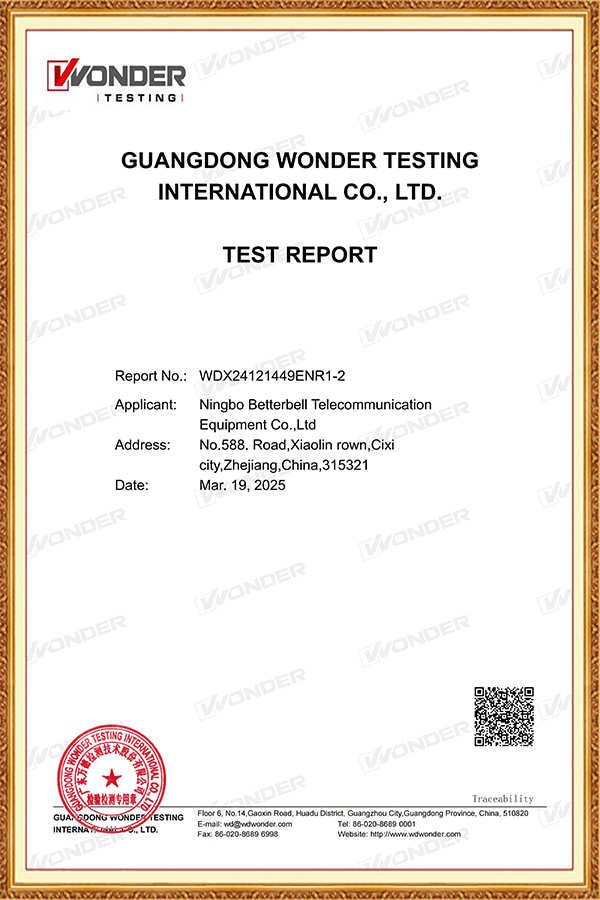
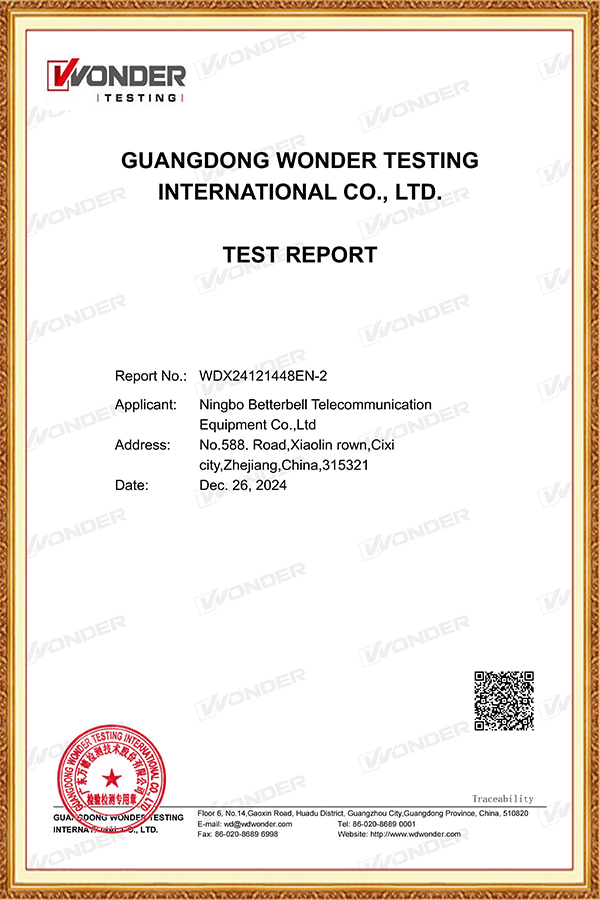
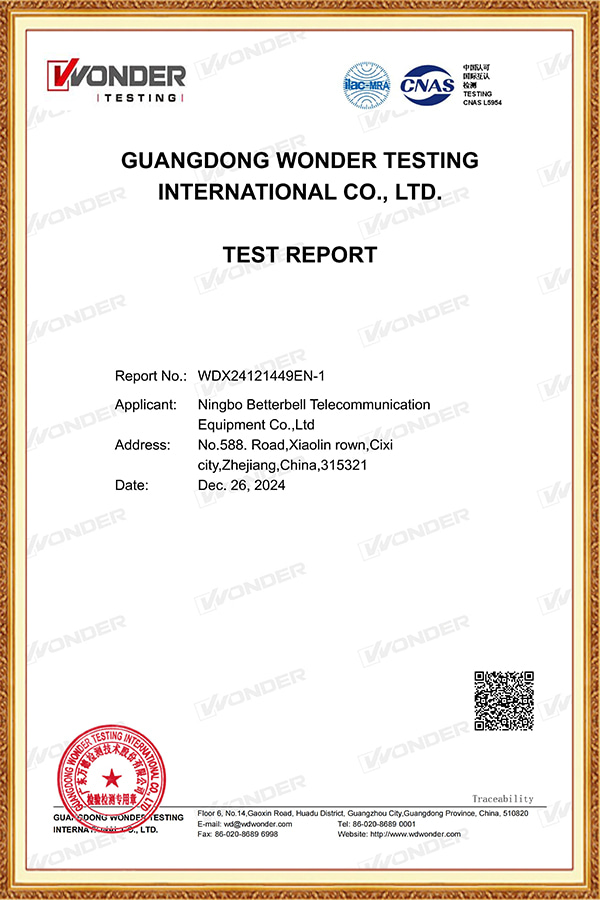

A Patch Panel Is Your Network’s Centralized Control Point A patch panel functions as a static, centralized termination point that organizes, protects, and simplifies your structured cabling infrastructure. Instead of running long horizontal cables directly to active switches (which risks damage and creates chaos), all cables t...
Read More
Product Series
Product Category
OEM Patch Panel Manufacturer
-
19-inch 1U 48-port unshielded rack (removable window) SP-3408-48P
-
19-inch 1U 12-port shielded blank frame SP-3409S-12P
-
Cat5e 19-inch 1U unshielded 24-port patch panel (flip-top plastic window) SP-3410D24-C5E
-
Cat6e 19-inch 1U shielded 48-port patch panel SP-3262SK48-C6A
-
C6 19-inch 1U Unshielded 24-Port Patch Panel (Flip-top Plastic Window) SP-3411D24-C6
Message Feedback
About Us

Ningbo Betterbell Telecommunication Equipment Co., Ltd.
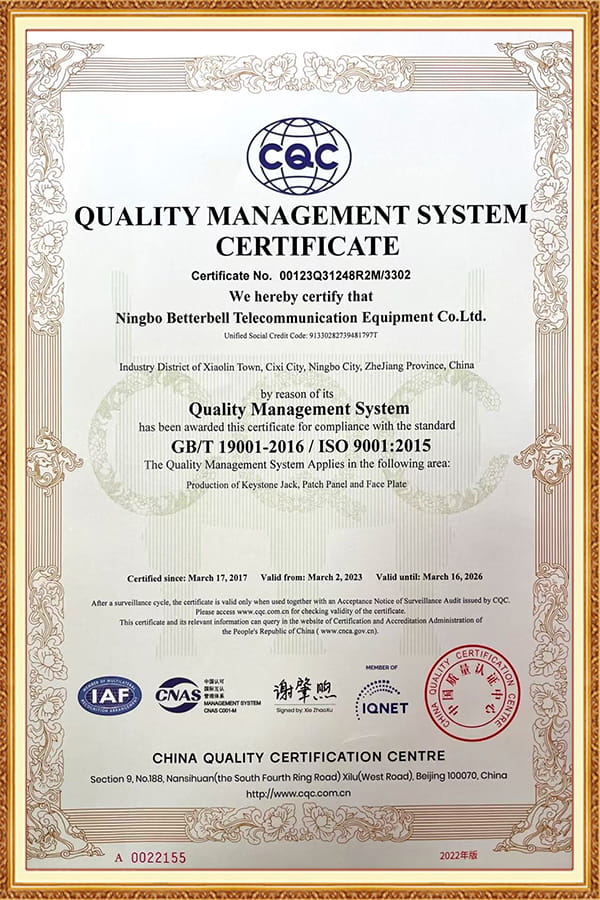
Ningbo Betterbell Telecommunication Equipment Co., Ltd. (BTBL), founded in 2002 and located in Ningbo, China, enjoys convenient transportation, with close proximity to Ningbo and Shanghai seaports as well as major airports. We OEM Patch Panel Manufacturer and Custom Patch Panel Factory, specialize in the R&D and manufacturing of structured cabling products, with core offerings including Toolless Plugs, Keystone Jacks, and Patch Panels, widely applied in data centers, office networks, and industrial communications. BTBL holds independent intellectual property rights and import/export licenses, and is committed to delivering high-quality, high-performance connectivity solutions to customers worldwide.
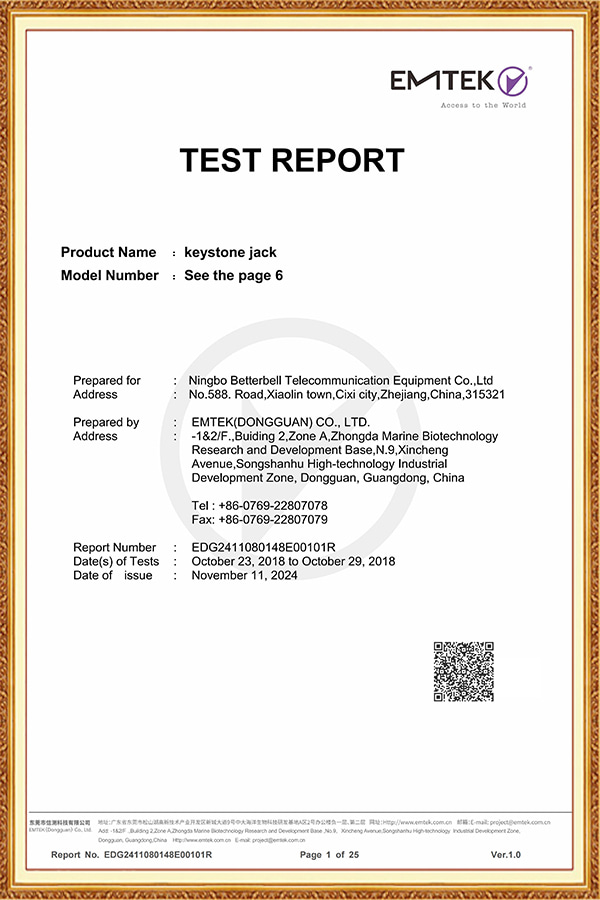
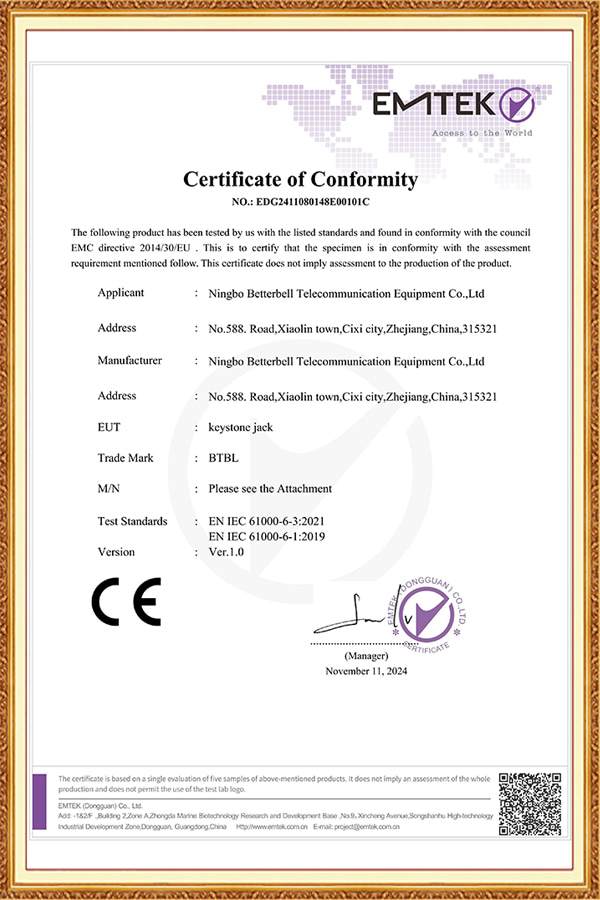
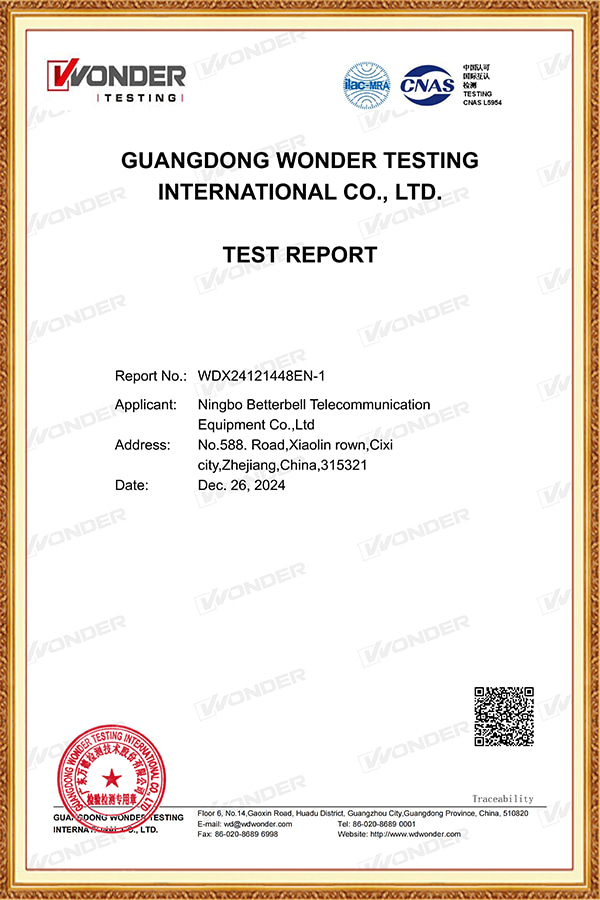
Certificate Of Honor
News
-
-
What is the Difference? A Patch Panel is a passive hardware unit that organizes and manages cable terminations, primarily within a single rack or enclosure, enabling flexible connections between devices. An Intermediate Distribution Frame (IDF) is a complete distribution point or room that houses multiple patch panels, switche...
Read More -
The Direct Answer: A Face Plate Is Your Network's Termination Point The primary function of a face plate is to serve as the clean, secure, and organized termination point for low-voltage cabling (like Ethernet, coaxial, or audio cables) on a wall or surface. Using it correctly means housing female connectors—such as keystone ja...
Read More
Patch Panel Industry Knowledge
How to Avoid Fiber Optic Loss Caused by Patch Panel Cords?
In high-density network environments, the quality of fiber optic connections directly impacts data transmission efficiency. Avoiding fiber optic loss caused by patch panel cords is fundamental to ensuring high-speed network operation.
1. Choose Toolless Fiber Optic Accessories
Traditional fiber optic connections require screwdrivers for securing the fiber, which can easily lead to over-tightening or loosening, causing damage to the fiber optic core.
BTBL Solution: Ningbo Betterbell Telecommunication Equipment Co., Ltd. specializes in the research and development of toolless technology. Their patch panel design eliminates the need for screwdrivers, using flexible clamps to easily secure the fiber.
Advantages: This design not only improves insertion efficiency (approximately 3 seconds per insertion/removal) but also prevents scratches or bending damage to the fiber end face caused by improper operation, significantly reducing fiber insertion loss.
2. Precise Fiber Core Alignment
Fiber optic connection loss largely depends on the precise alignment of the fiber core.
BTBL Design: Employs high-precision fiber core alignment technology to ensure quick and accurate fiber alignment during insertion.
Avoid Mis-Insertion: Tool-free design typically includes a mis-insertion prevention structure to ensure that different types of fibers (such as SC, LC, ST) are not mis-inserted, preventing high losses due to incorrect connections.
3. Controlling Fiber Bending Radius
Excessive bending is one of the main causes of fiber loss.
High-Performance Materials: BTBL patch panels are made of low-melting-point PC material, offering excellent bending resistance.
Strict Control: Product design strictly controls the minimum bending radius of the fiber to prevent compression or excessive bending, thereby avoiding micro-bending loss.
4. Avoiding Patch Cord Crossover
In high-density patch panels, excessively long or tangled patch cords can lead to optical signal attenuation.
Optimized Layout: BTBL provides a clear labeling system and a neat patch cord management solution. It is recommended to use patch cords of appropriate length to avoid unnecessary tangling.
High-quality materials: The patch panel's interior uses highly elastic rubber to reduce fiber optic loss caused by uneven stress.
| Key Measures | Specific Practices |
| Clean Endfaces and Precise Alignment | Before inserting or removing jumpers, use a compressed air canister or fiber cleaning pen to remove dust from the endfaces, ensuring the interface is clean. When aligning, insert the fiber vertically and confirm a "click" sound to ensure the latch is engaged, avoiding diagonal insertion that can cause physical damage and increase insertion loss . |
| Avoid Excessive Bending | Strictly control the bend radius of the jumper, typically not less than 40mm. Excessive bending can cause microbending loss, and severe cases may completely block the optical signal . |
| Use Toolless Connections | BTBL recommends using toolless (Toolless) patch panels and jumpers. The toolless design fixes the fiber through an elastic latch without the need for screwdrivers, reducing the risk of damage to the fiber endface and instability caused by over-tightening or loosening . |
What is the difference between a Patch Panel and an ODF?
In structured cabling systems, while both Patch Panels and ODFs (Optical Distribution Frames) are used to connect optical fibers, they differ significantly in their functional positioning and application scenarios.
1. Functional Positioning: Distribution vs. Aggregation
Patch Panel: Primarily used for distributing fiber optic signals. Located in the distribution or access layer of the equipment room, it further distributes the fiber optic signals aggregated from the ODF to various servers, switches, or terminal devices.
ODF (Optical Distribution Frame): Primarily used for aggregating fiber optic signals. Typically located in the backbone layer of the equipment room, it is responsible for aggregating fiber optic trunks from different floors or areas, organizing and summarizing them before distributing them to the next level of patch panels.
2. End-face Type: Adapter vs. Termination
Patch Panel: Typically equipped with patch cords for quick fiber optic signal transfer. Its end-face design prioritizes ease of insertion and removal, accommodating frequent replacements.
ODF: Typically equipped with adapters for fiber optic trunk termination. ODF design prioritizes fiber optic stability and reduces micro-bending loss during long-term use.
3. Structural Features: Modular vs. Frame
Patch Panel: Highly modular, commonly offering 10G, 40G, and 80G high-speed modules, supporting tool-less insertion and hot-swapping for rapid upgrades.
ODF: Typically rack-mounted or wall-mounted, emphasizing fiber optic bending radius management, with dedicated rails and cable trays for fiber optic management.
4. Applicable Scenarios: Local Connection vs. Backbone Connection
Patch Panel: Suitable for connections within data center cabinets (Horizontal Cabling).
ODF: Suitable for vertical cabling connections between server rooms or floors.
| Dimension | Patch Panel | ODF (Optical Distribution Frame) |
| Functional Positioning | Primarily used for connecting and managing fiber cables, serving as a node for vertical or horizontal cabling, typically directly connected to servers and switches . | Not only connects and manages but also protects fiber cores and tail fibers, featuring functions such as fiber patching, distribution, and cable organization, usually used in more complex server room environments . |
| Structural Design | Relatively simple structure, mainly consisting of the patch panel body and fiber adapters . | More complex structure, in addition to patch panels and adapters, typically integrates fiber splicing trays, fiber fixation devices, fiber storage areas, and other modules . |
| Applicable Scenarios | Suitable for local networks, internal connections within data centers, and fiber management for small to medium-sized projects . | Suitable for long-distance communication, large-scale networks, and scenarios requiring high-density fiber management, such as core layer cabling in large data centers . |
How to install a patch panel?
Correct installation is crucial to ensuring the performance of the patch panel. BTBL (Ningbo Betterbell), a leading patch panel manufacturer, provides customers with a variety of professional installation solutions.
1. Rack Mount
This is the most common installation method, suitable for data centers and server rooms.
Standardized Size: BTBL patch panels conform to the 19-inch rack standard and are available in 1U, 2U, and 4U heights.
Fixing Method: The patch panel has pre-drilled screw holes on the back; users simply need to use a screwdriver to secure it to the side wall of the server rack.
Advantages: This installation method facilitates centralized management of fiber optic patch cords and improves heat dissipation.
2. Wall Mount
Suitable for scenarios with limited space or where direct wall-mounted fiber optic management is required.
Convenience: BTBL's patch panels feature a lightweight design and are equipped with wall-mounting holes or dedicated brackets. Users simply need to secure them to the wall using expansion bolts.
Space Utilization: Wall-mounted installation saves floor space and is commonly used near server room entrances or small server racks.
3. Toolless Installation
This innovative installation method improves installation efficiency.
Quick Locking: BTBL's toolless patch panels feature a flexible snap-fit structure. Users can secure fiber optic modules to the patch panel simply by pressing the snaps, without the need for a screwdriver.
Quick Replacement: When replacing or upgrading fiber optic modules, the tool-less design significantly reduces maintenance time and avoids misoperation caused by using a screwdriver.
4. Precautions
Check Specifications: Before installation, please verify the patch panel's socket type (e.g., LC, SC, ST) and quantity to ensure it meets the actual needs of the server room.
Allow Space: Allow sufficient bending radius for cables during installation to prevent compression of fiber optic cables.
Protective measures: For fiber optic distribution frames (ODFs), ensure that they are installed in a dust-proof and moisture-proof environment to prevent contamination of the fiber end faces.
| Installation Method | Applicable Scenarios and Features |
| Rack-Mount Installation | This is the most common method. Patch panels adopt a 19-inch standard size (e.g., 1U, 2U height) and are installed directly inside standard racks. Installation involves using screws to fix the panel to the pre-drilled holes on the rack's sidewall . |
| Wall-Mount Installation | Suitable for scenarios with limited space or where only a few ports need to be managed. This type of panel has mounting holes on the back and can be directly fixed to a wall, saving space inside the rack . |
| Toolless Modular Installation | Targeted at high-density and high-frequency maintenance scenarios (such as data centers). It adopts a toolless design. Through a latch structure, installation and removal can be performed quickly without a screwdriver, greatly improving maintenance efficiency and reducing the risk of physical damage . |
Frequently Asked Questions (FAQ)
Q1: How does a Patch Panel work?
A: When a network cable (from a wall socket) is crimped to the terminals on the back of the panel, the front jacks can be connected to a network switch via patch cords, achieving a physical layer connection.
Q2: What role does a Patch Panel play in fiber optic cabling?
A: In a fiber optic cabling system, a Patch Panel is used to manage fiber patch cords. It allows for flexible connection and switching of fiber optic lines between different devices (such as fiber distribution frames and fiber switches).
Q3: Why use a "Keystone" module on a Patch Panel?
A: Using a Keystone module standardizes panel wiring, facilitating quick plugging and unplugging and maintenance. This is crucial for scenarios requiring frequent replacement or testing of network ports.
Q4: Does Ningbo Betterbell offer custom patch panel services?
A: As a professional communication equipment manufacturer, Ningbo Betterbell offers OEM or custom services, capable of designing according to specific customer needs (such as panel size and port type).
Looking for the Reliable & Professional
Partner with the Best BTBL.
Contact Us
-
 No. 588, Xiaolin Avenue, Xiaolin Town, Cixi City, Zhejiang Province
-
 [email protected]
-
 +86-574-63507962
-
 +86-15988643730
QUICK LINKS
Copyright Ningbo Betterbell Telecommunication Equipment Co., Ltd. All rights reserved. OEM Patch Panel Manufacturer
