

 English
 Deutsch
 Español
 русский










A Patch Panel Is Your Network’s Centralized Control Point A patch panel functions as a static, centralized termination point that organizes, protects, and simplifies your structured cabling infrastructure. Instead of running long horizontal cables directly to active switches (which risks damage and creates chaos), all cables t...
Read More
Product Series
Product Category
OEM Keystone Jack Manufacturer
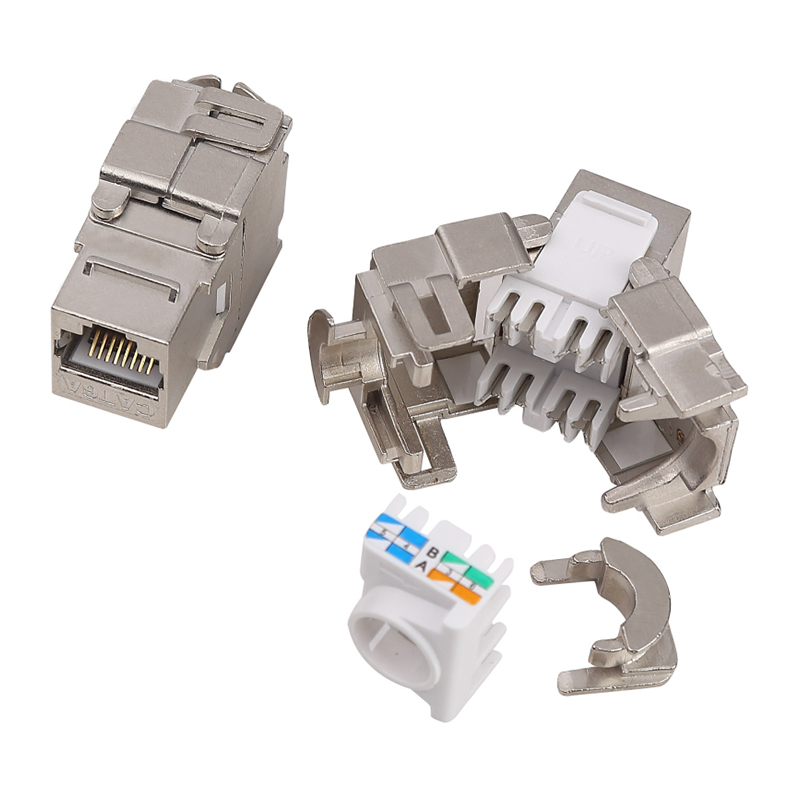
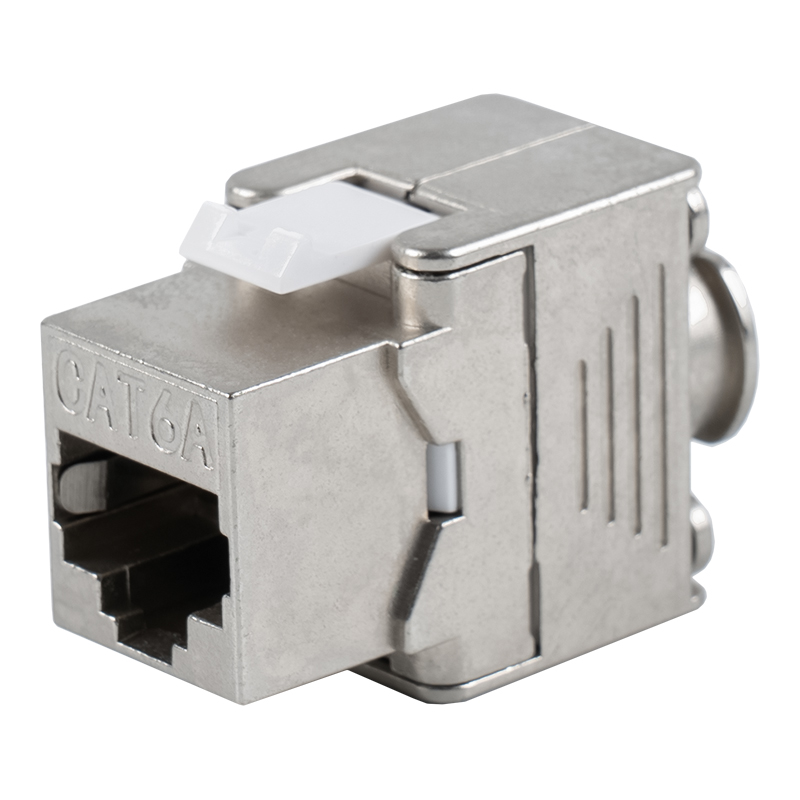
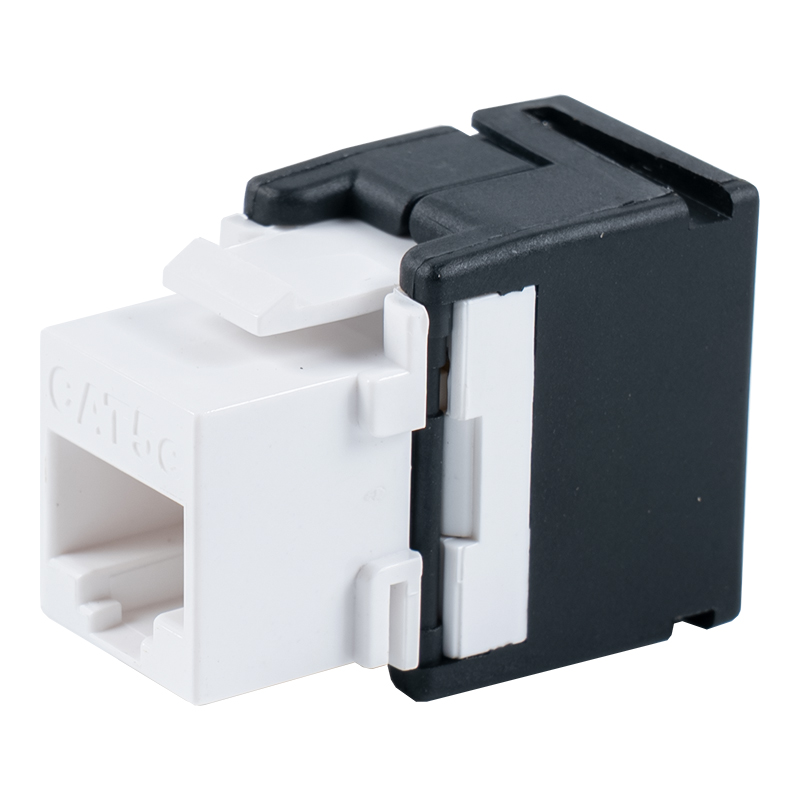
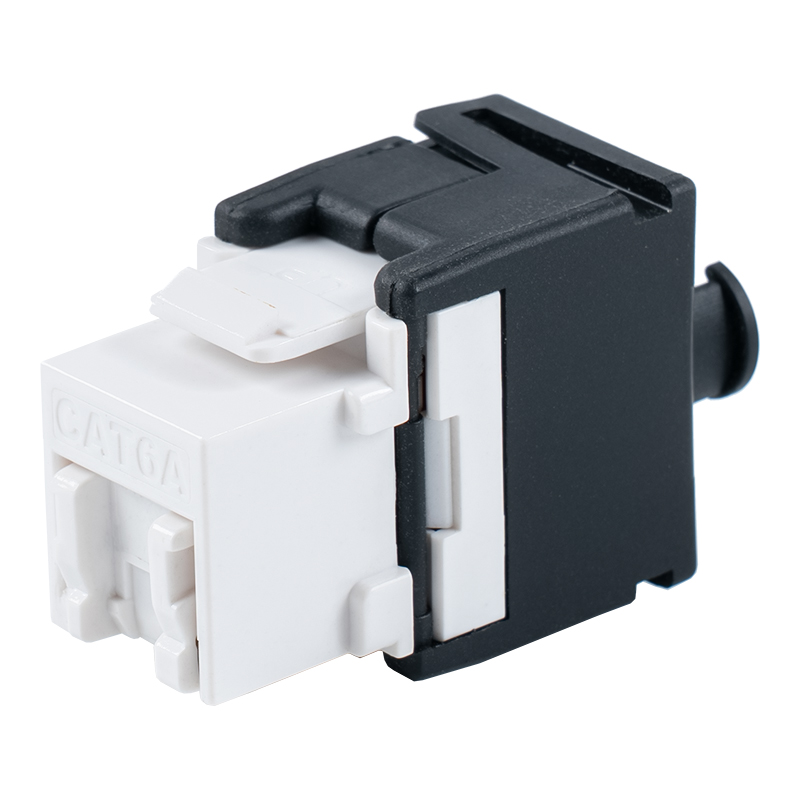
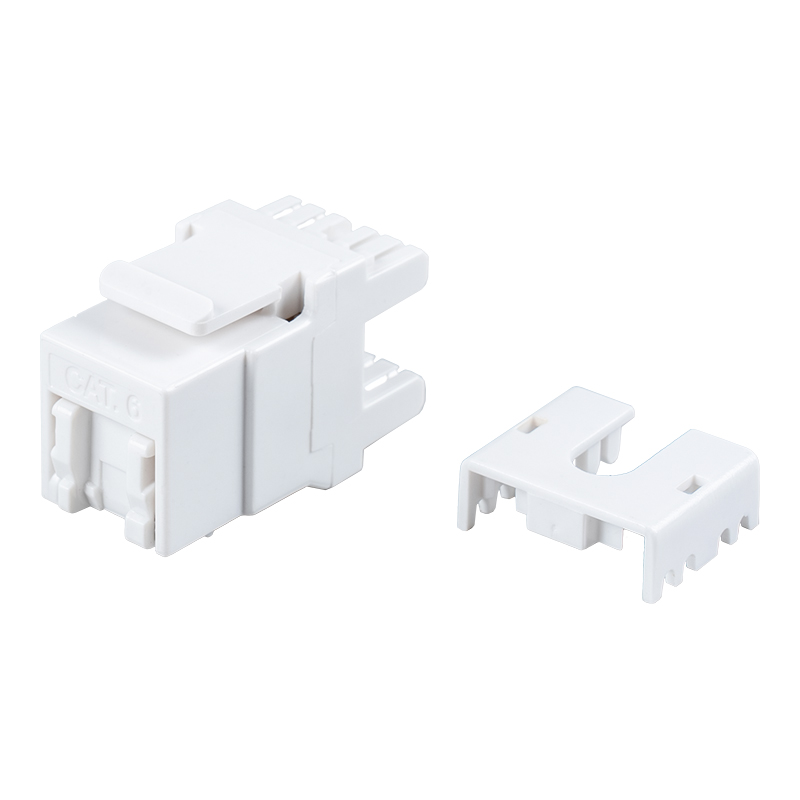
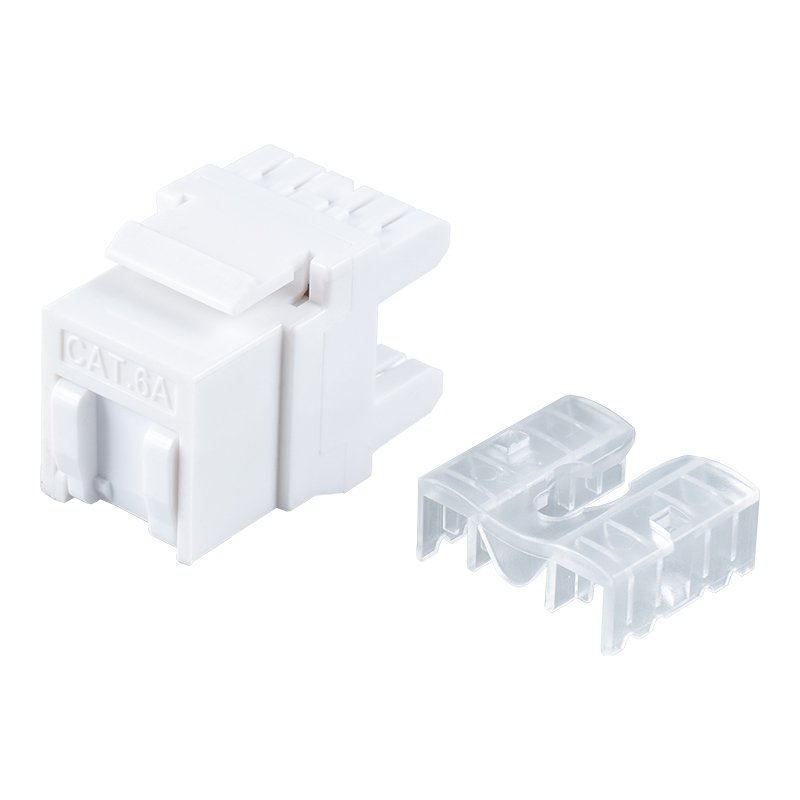
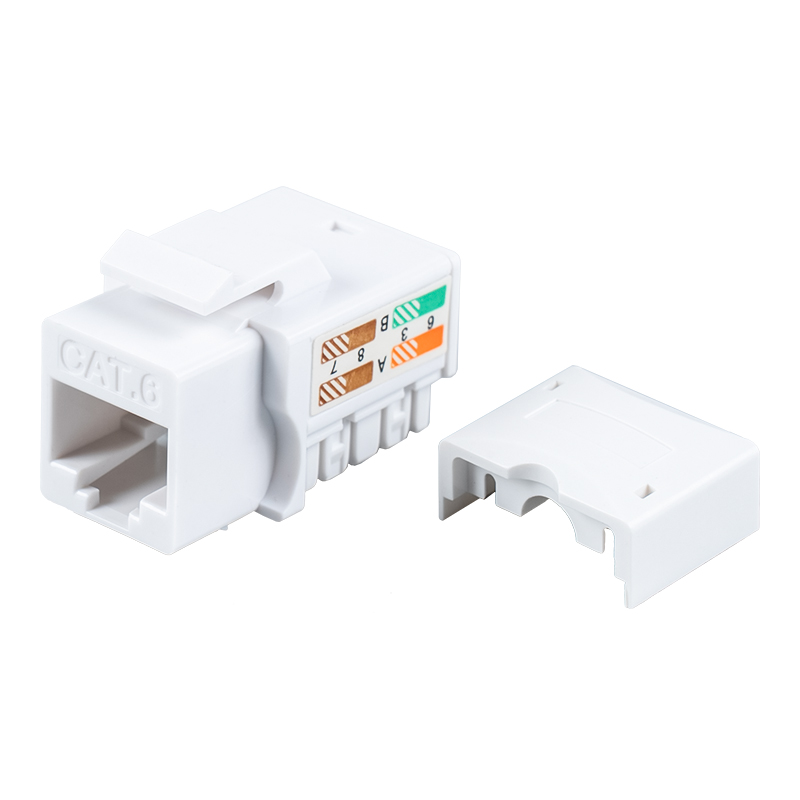
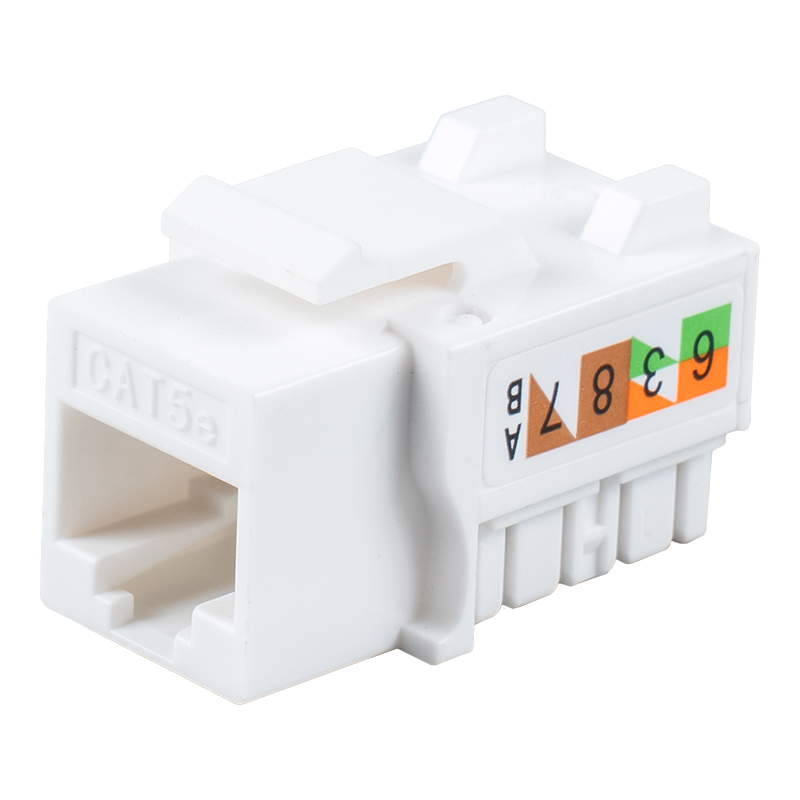
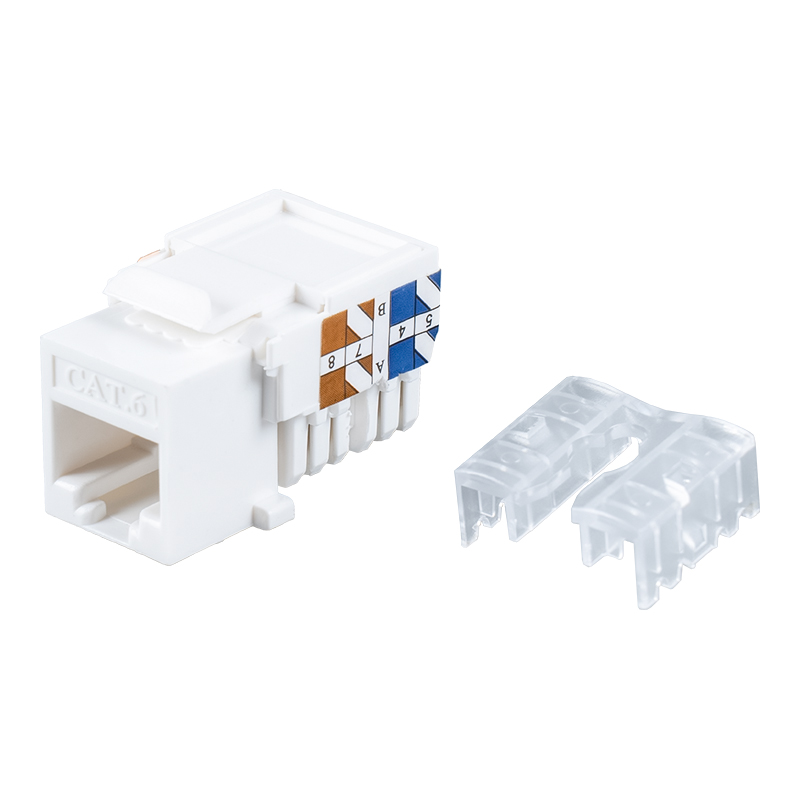
The Keystone Jack is a standardized socket module widely used in network cabling, communications, and audio and video systems. It provides a flexible and reliable port connection method, allowing users to easily insert various interface modules into patch panels, wall plates, or panels, enabling quick connection and removal of different cable types. Its modular design facilitates expansion and maintenance, and is compatible with multiple communication standards.
-
180-Degree Shielded Toolless Keystone Jack (with lock) SM-2335BSH8C6A
-
C6A Shielded 180° Tolless Keystone Jack (with bracket) SM-2335SH8C6A
-
C6A Shielded 180° Tolless Keystone Jack (mini type) SM-635SC6A
-
C6A Shielded 180° Tolless Keystone Jack (flip-open type) SM-2336SH8C6A
-
C6A Unshielded 180° Tolless Keystone Jack SM-2335H8C6A
-
C6A Unshielded 180° Tolless Keystone Jack(with cable holder and shutter)SM-2335BCH8C6A
-
Cat6 Unshielded 180° Toolless Modular Jack (flip-open type) SM-2336H8C6
-
Cat6 Unshielded 180° Modular Jack (with shutter) SM-2064CD8C6
-
Cat6 Unshielded 180° Modular Jack (mini-type with shutter) SM-2089CD8C6-1
-
Cat6 Unshielded 90° Modular Jack SM-2053H8C6
-
Cat5e Unshielded 90° Modular Jack SM-2016H8C5E
-
Cat6 Unshielded 90° Keystone Jack SM-2337H8C6
Message Feedback
About Us

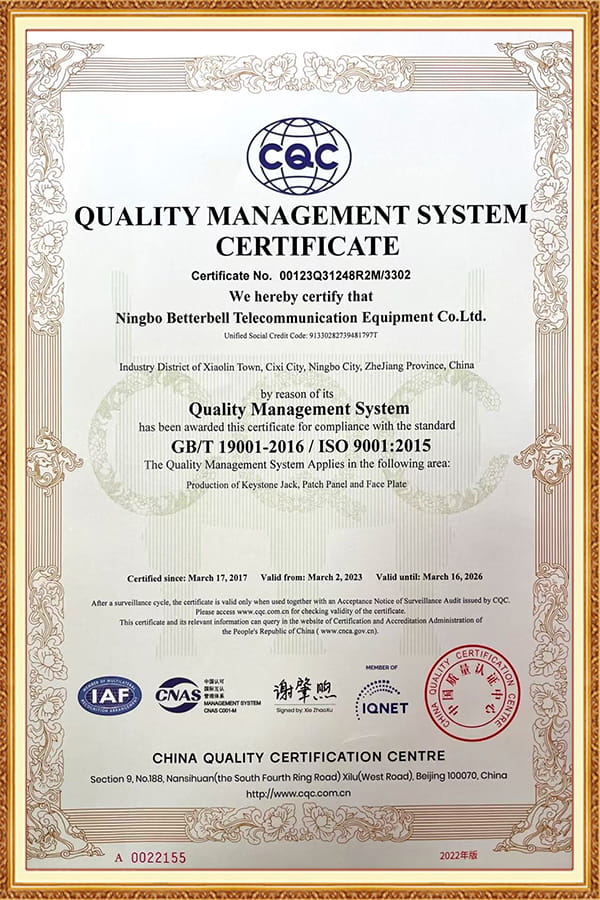
Ningbo Betterbell Telecommunication Equipment Co., Ltd.
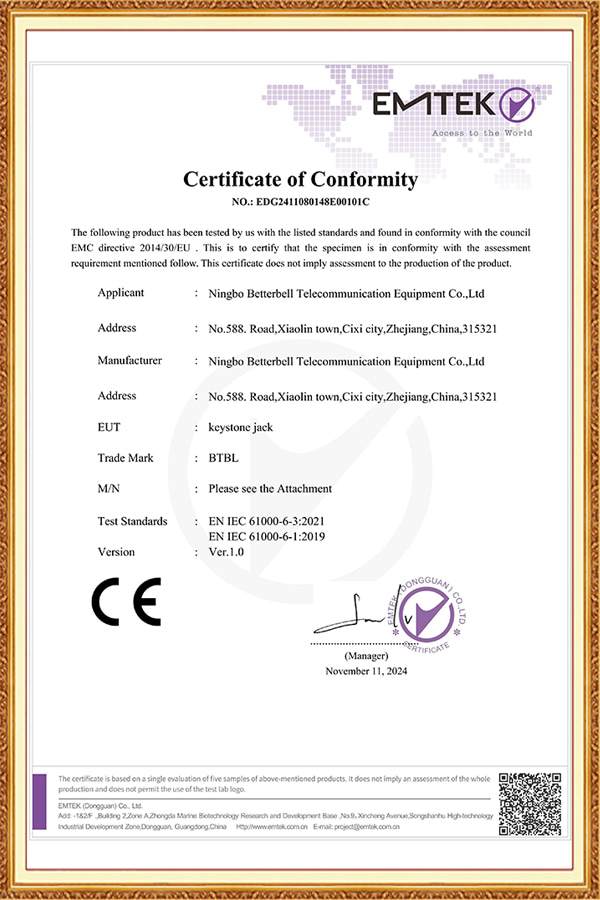
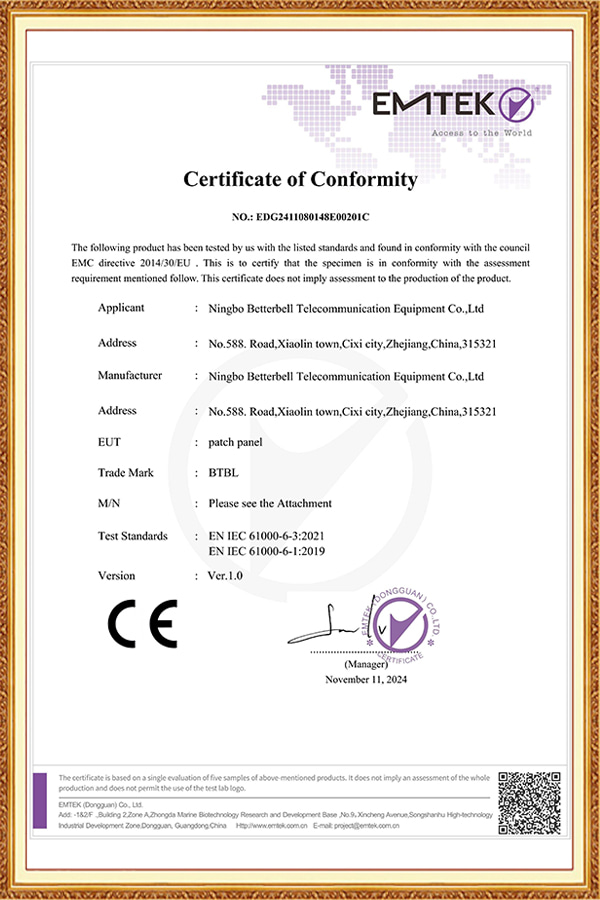
Ningbo Betterbell Telecommunication Equipment Co., Ltd. (BTBL), founded in 2002 and located in Ningbo, China, enjoys convenient transportation, with close proximity to Ningbo and Shanghai seaports as well as major airports. We OEM Keystone Jack Manufacturer and Custom Modular Jack & Inline Coupler Factory, specialize in the R&D and manufacturing of structured cabling products, with core offerings including Toolless Plugs, Keystone Jacks, and Patch Panels, widely applied in data centers, office networks, and industrial communications. BTBL holds independent intellectual property rights and import/export licenses, and is committed to delivering high-quality, high-performance connectivity solutions to customers worldwide.
Certificate Of Honor
News
-
-
What is the Difference? A Patch Panel is a passive hardware unit that organizes and manages cable terminations, primarily within a single rack or enclosure, enabling flexible connections between devices. An Intermediate Distribution Frame (IDF) is a complete distribution point or room that houses multiple patch panels, switche...
Read More -
The Direct Answer: A Face Plate Is Your Network's Termination Point The primary function of a face plate is to serve as the clean, secure, and organized termination point for low-voltage cabling (like Ethernet, coaxial, or audio cables) on a wall or surface. Using it correctly means housing female connectors—such as keystone ja...
Read More
Keystone Jack Industry Knowledge
What are the main uses of a Keystone Jack?
Main Uses of a Keystone Jack
Keystone Jacks (modular connectors) are key connectors in modern network cabling systems, widely used in various scenarios.
1. Network and Communication Centers
Standardized Connections: As a standardized interface module, the Keystone Jack is an indispensable component of network cabling systems, primarily used to terminate cables in wall sockets, panels, or cabinets.
Data Transmission: It is widely used in data centers, office networks, and industrial communication environments, handling the transmission of network signals, voice signals, and multimedia signals.
2. Modular Assembly and Maintenance
Flexible Insertion and Removal: Keystone Jacks allow users to easily insert and remove various interface modules (such as RJ45 and fiber optic modules) without the need for specialized tools. This modular design greatly facilitates network expansion and maintenance.
Multiple Standard Compatibility: It is compatible with multiple communication standards, can adapt to different types of cables, provides flexible port connection solutions, and supports quick connection and disconnection.
3.Audio/Video Systems
Multifunctional Applications: Besides network communication, Keystone Jacks are also commonly used in audio/video systems as distribution interfaces for audio and video signals, ensuring stable signal transmission.
| Use Category | Specific Description |
| Network & Communication Core | Standardized Connection: Terminates cables in wall sockets, panels, or cabinets, ensuring reliable network signal transmission. |
| Data Transmission: Widely used in data centers, office networks, and industrial communications, supporting voice and multimedia signals. | |
| Modular Assembly & Maintenance | Flexible Plugging: Supports quick insertion and removal of various interface modules, facilitating network expansion and maintenance. |
| Standard Compatibility: Adapts to multiple communication standards, providing high flexibility. | |
| Audio-Video Systems | Multifunctional Application: Serves as a signal distribution interface in audio-video systems, ensuring stable transmission of audio and video signals. |
What is the difference between a Keystone Jack and an RJ45 plug?
Differences between Keystone Jacks and RJ45 Plugs
Although they are often used together, they differ significantly in function and purpose.
1. Definition and Functional Positioning
Keystone Jack: It is a fixed port in a wall or panel for accepting RJ45 plugs (or other types of modules). It is itself a passive port or module.
RJ45 Plug: It is a mobile connector used to connect one end of a network cable (such as Cat5e, Cat6). It is the termination connector for network cabling, responsible for transmitting signals from the cable to the device.
2. Installation Location
Keystone Jack: Typically installed in wall panels, rack panels, or patch panels as a fixed access point.
RJ45 Plug: Typically installed at the end of a network cable, used to connect network devices such as computers, switches, and routers.
3. Maintenance Methods
Keystone Jack: Features a modular design, allowing users to directly unplug and plug in different modules (such as RJ45 or fiber optic modules) for replacement or upgrades.
RJ45 Plug: Requires tools such as crimping pliers or wire strippers for installation and repair; typically for single use or replacement.
| Differentiation Dimension | Keystone Jack | RJ45 Plug |
| Definition & Function | Fixed Port: An endpoint installed in walls or panels that accepts RJ45 plugs or other modules. | Mobile Connector: The terminal end of a network cable that transmits signals from the cable to devices. |
| Passive: Acts as a passive connection point. | Active: Functions as an active connector. | |
| Installation Location | Fixed Installation: Installed in wall panels, rack panels, or patch panels. | Mobile Installation: Attached to the end of a network cable, used to connect computers, switches, etc. |
| Stationary: Remains in a permanent location. | Portable: Frequently moved or reconnected. | |
| Maintenance Method | Modular: Directly plug and play different modules, facilitating upgrades and maintenance. | Tool Required: Requires crimping or stripping tools for installation, usually replaced or repaired when damaged. |
| Tool-Free: Often supports tool-less installation. | Tool-Dependent: Not typically tool-less. |
Do Ningbo Betterbell's products support toolless installation?
Yes, Ningbo Betterbell Telecommunication Equipment Co., Ltd. specializes in providing toolless installation solutions.
1. Product Expertise
Toolless Plugs: Ningbo Betterbell is an OEM manufacturer of toolless plugs and keystone jacks, focusing on the research and development and manufacturing of structured cabling products.
Multiple Modules: Its product line includes toolless plugs, keystone jacks, patch panels, etc., all supporting quick installation without tools.
2. Core Advantages
High Efficiency and Convenience: Toolless installation significantly improves cabling efficiency, suitable for rapid deployment in data centers and office networks.
Reliable Performance: Despite the toolless installation method, Ningbo Betterbell products still prioritize high quality and performance, ensuring reliable and stable connections.
3. Wide Applications
Applicable Scenarios: Its toolless series products are widely used in data centers, office networks, industrial communications, and other fields, providing convenient connectivity solutions.
| Support Status | Specific Description |
| Toolless Supported | Ningbo Betterbell (Ningbo Betterbell Telecommunication Equipment Co., Ltd.) specializes in developing tool-less installation solutions. |
| Product Expertise | Toolless Plugs: Tool-less crimping plugs. |
| Keystone Jacks: Modular sockets that support tool-less installation. | |
| Patch Panels: Structured cabling systems. | |
| Core Advantages | High Efficiency: Enables rapid deployment without specialized tools. |
| Wide Applicability: Suitable for data centers, office networks, industrial communications, and other scenarios. |
Frequently Asked Questions (FAQ)
Q1: What are the main types and specifications of Keystone Jacks?
A: They include RJ45 Ethernet jacks, HDMI jacks, fiber optic connectors, etc., with specifications such as Cat5e, Cat6, and Cat6A.
Q2: How is the lifespan and durability of Keystone Jacks guaranteed in data center cabling?
A: Focus on the abrasion resistance of its metal contacts, insulation withstand voltage rating, and whether it supports hot-swapping.
Q3: What are the main products and services offered by Ningbo Betterbell?
A: Main products include toolless Keystone Jacks, patch panels, face plates, and other network communication accessories.
Q4: What are the technical advantages of Ningbo Betterbell's Keystone Jack products?
A: Their products often feature a toolless design, facilitating quick installation and maintenance, which is very popular in network room cabling.
Looking for the Reliable & Professional
Partner with the Best BTBL.
Contact Us
-
 No. 588, Xiaolin Avenue, Xiaolin Town, Cixi City, Zhejiang Province
-
 [email protected]
-
 +86-574-63507962
-
 +86-15988643730
QUICK LINKS
Copyright Ningbo Betterbell Telecommunication Equipment Co., Ltd. All rights reserved. OEM Keystone Jack Manufacturer
